
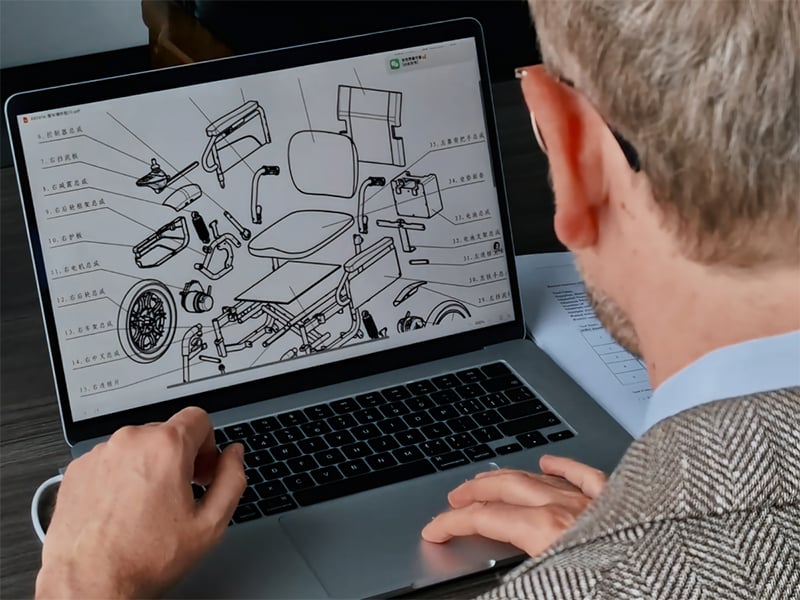
Electric Wheelchair OEM vs ODM with a Manufacturing Partner
The latest edition of the International Air Transport Association’s (IATA) *Dangerous Goods Regulations*—along with the corresponding revisions to the *Specifications for the Air Transport of Lithium Batteries* issued by the Civil Aviation Administration of China (CAAC)—will officially come into force on January 1, 2026. These new regulations introduce several significant adjustments regarding the conditions for transporting electric wheelchairs and mobility scooters containing lithium batteries, whether in the passenger cabin or the cargo hold. Baichen’s policy research team has distilled four key provisions that directly impact wheelchair users, aiming to help you plan ahead and avoid any travel disruptions.
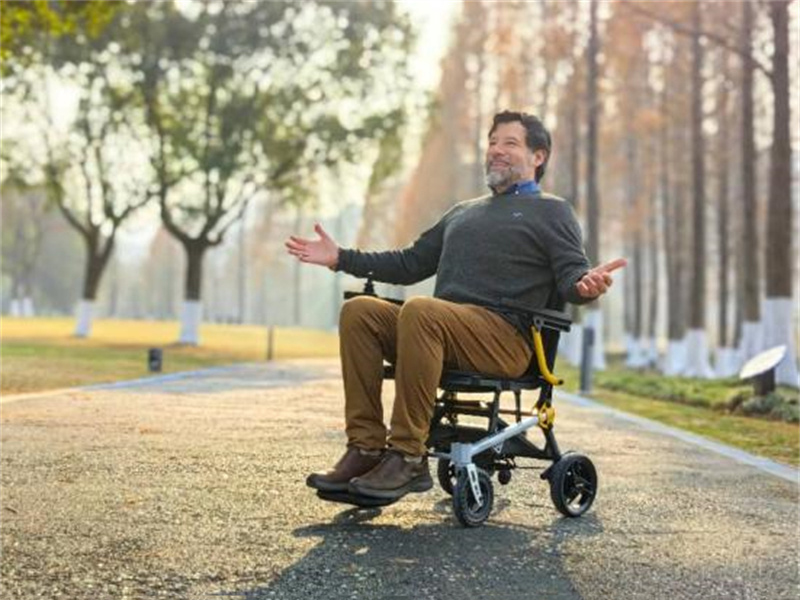

Change 1: Rated Energy Limits Remain Unchanged, but Transport Conditions for "Spare Batteries" Have Tightened
Both the old and new regulations consistently require that the rated energy of lithium batteries installed within a wheelchair must not exceed 300 Wh. If the rated energy exceeds 300 Wh, prior approval from the air carrier is mandatory, and such devices are typically permitted for transport only via cargo aircraft. The new regulations specifically tighten the rules regarding *spare batteries*: each passenger is permitted to carry a maximum of two spare batteries, provided that the rated energy of each individual battery does not exceed 160 Wh. However, a newly added clause stipulates that spare batteries must be individually packaged with insulating material (previously, only protection against short circuits was required); furthermore, they are strictly prohibited from being checked as hold luggage and must be carried as hand luggage. Additionally, any spare batteries exceeding 100 Wh must be declared in writing to the airline during the check-in process.
Baichen advises users to verify the Wh rating displayed on their wheelchair battery label prior to travel, and to use the insulating bags provided by the original manufacturer—or apply non-conductive tape—to cover and insulate the battery terminals.
Change 2: "Battery Disconnection Required" When Checking Wheelchairs Changes to "Preferably Remain Installed"
Under the previous standards, passengers were generally required to remove the battery from their wheelchair when checking the device as hold luggage, and to carry the battery separately as hand luggage. The new regulations have been adjusted based on practical user feedback: the preferred protocol is now to keep the battery installed within the wheelchair, provided that the battery terminals are adequately insulated and protected, and that the wheelchair cannot be accidentally activated while stowed in the cargo hold. Airlines will only require the battery to be removed and transported separately in instances where they are unable to verify the effectiveness of the battery's protective measures.
This change significantly reduces the difficulty and safety risks associated with the on-site removal and re-installation of batteries at the airport. The Baichen "Aviation Edition" wheelchair series comes factory-equipped with "aviation-grade quick-release terminals" and insulating covers for the battery terminals; users can complete the necessary insulation protection within 10 seconds without the need for any tools.
Change 3: Airline Approval Time Uniformly Extended to 72 Hours
Previously, the notification deadlines for lithium-battery-powered wheelchairs varied among different airlines (ranging from 24 hours, 48 hours, or even less). The new regulations now mandate that passengers must submit a written application to the airline at least 72 hours prior to the scheduled departure time. This application must include details regarding the wheelchair model, battery type, and proof of rated energy (such as product manuals, photos of battery labels, etc.). For international flights, it is recommended to provide English-language documentation as well.
Baichen reminds users: When submitting an application, you should clearly specify whether the lithium-ion battery used in the wheelchair is "non-removable" or "removable," and you should proactively request written confirmation from the airline (via SMS or email). Currently, both the Chinese and English versions of the Baichen official website offer a "One-Click Aviation Pass Download" service; simply enter your product's serial number to generate a battery declaration statement that complies with IATA standards.
Change 4: Low-Energy Batteries (≤100 Wh) Are Exempt from Advance Declaration, But Specific Operational Details Still Apply
The new regulations explicitly clarify for the first time that for wheelchairs powered by lithium batteries with a rated energy of no more than 100 Wh—provided that the battery terminals are insulated and the wheelchair is powered off and secured—passengers are not required to submit a declaration 72 hours in advance. However, passengers must still proactively inform the airline staff during the check-in process. If the wheelchair can be folded directly and stowed in the overhead compartment (meaning its dimensions comply with the airline's carry-on baggage regulations), it may be carried as cabin baggage occupying a seat space and will not count toward the passenger's free checked baggage allowance.
The Baichen carbon fiber folding wheelchair features a total weight (wheelchair + battery) of just 15 kg. When folded, its dimensions are 970 × 530 × 270 mm—fully meeting the cabin baggage standards of major airlines (such as Air China, China Southern, Lufthansa, and Delta). Furthermore, it comes standard with a 100 Wh aviation-grade lithium battery, making it one of the most travel-friendly models available under the new regulatory framework.
Baichen's Initiative: Making Compliance Simpler
The implementation of these new regulations is fundamentally aimed at standardization and transparency, rather than restricting travel. Baichen has integrated aviation airworthiness design into its entire range of lightweight products and has established a comprehensive, end-to-end service chain encompassing "real-time interpretation of new regulations, product compatibility assessment, documentation generation, and airline liaison." If you plan to travel by air with a wheelchair in 2026 or beyond, we invite you to visit the official Baichen website to utilize our "Aviation Compliance Self-Check Tool," or to call our 24-hour travel support hotline; we will assist you in completing all necessary pre-flight declaration preparations through a seamless, one-stop process.
Ensuring peace of mind with every takeoff is Baichen's unwavering promise to its users.
Baichen is dedicated to leveraging innovative technology and user-centric design to provide global users with safer, more convenient, and intelligent mobility solutions. For more product information and mobility guides, please visit the official Baichen website.
Ningbo Baichen medical Devices Co.,LTD.,
+86-18058580651
Baichenmedical.com/baichenmobility.com

Copyright © Ningbo Baichen Medical Devices Co., Ltd. All Rights Reserved- Privacy Policy-Blog

 EN
EN