
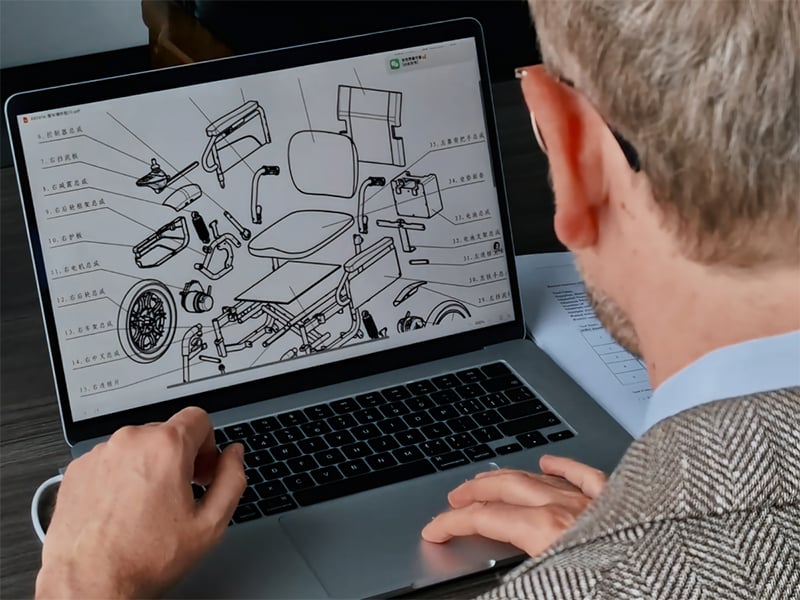
Electric Wheelchair OEM vs ODM with a Manufacturing Partner
A polished sample can make a strong first impression, but it cannot tell you how the next production batch will be controlled. For a distributor, the more useful question is what happens to an ordinary chair on an ordinary production day. How are the parts identified? What does an operator check? What happens when an inspector finds something wrong?
When buyers review electric wheelchair quality control with Baichen, we prefer to slow the visit down and follow one real model. We can look at its incoming components, frame work, wiring, assembly, functional checks and records in sequence. Our research and development page provides the wider product context, while the factory review stays close to the chair and configuration you may actually order.
Our quick answer
Follow one identified wheelchair from incoming parts to packing. Check how its frame is made, how the battery, controller, motors and brakes work together, and how inspection results connect to the finished unit or batch. We do not expect buyers to judge quality from a fast tour. Ask us to show the work instructions, actual records and the way our team handles a defect or controlled change.
Walk through one real wheelchair with us
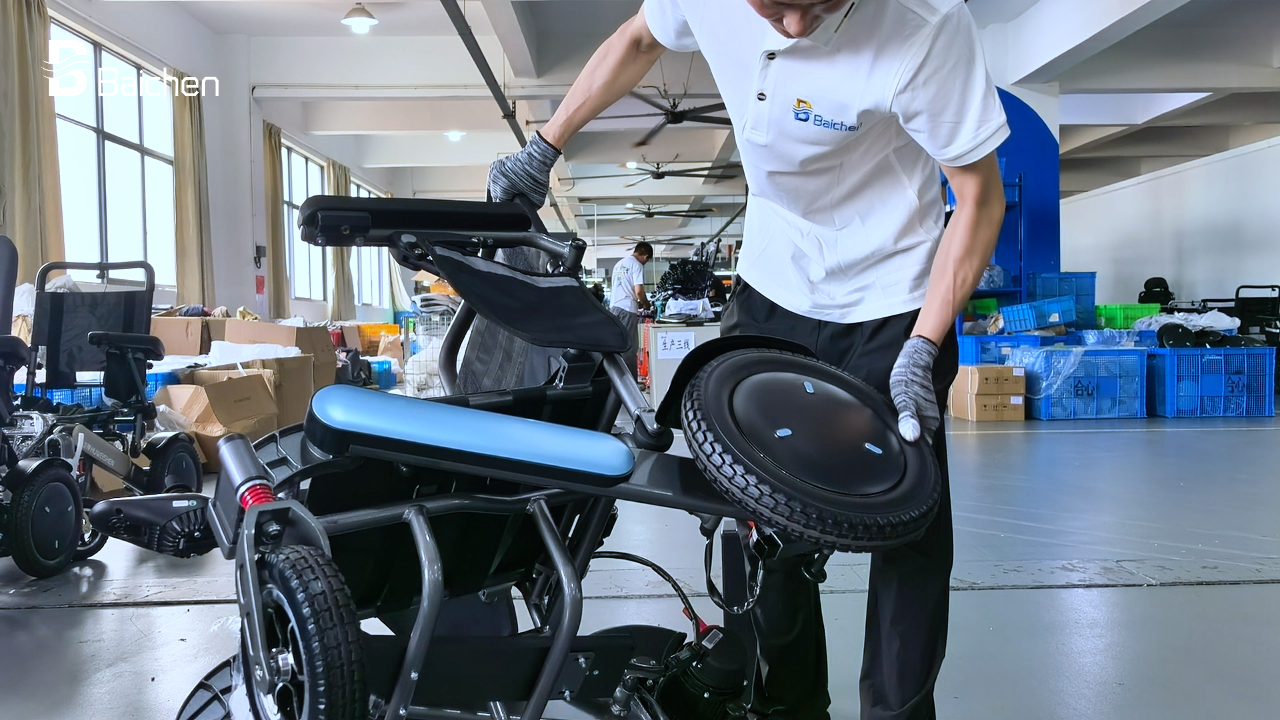
Factory tours often move quickly past the details that reveal control. Slow the process down. Select a model in production and follow its path from incoming components to finished goods. Observe how materials are identified, stored, issued, assembled, tested and packed.
Spend time in the incoming area. Purchase specifications should be available, inspection status should be visible, and accepted material should not be mixed with parts that are pending or rejected. Ask the inspector to walk through the checks used for frame parts, fasteners, tires, motors, controllers, batteries, chargers and upholstery. The answer should vary by risk: a cosmetic trim piece does not need the same attention as a safety-related part or a component with a history of failure.
Read the work instructions where the work actually happens. Then watch whether the operator follows the specified fastener, routing, torque and assembly sequence for the model being built. Look at the details that are easy to miss during a fast tour: wiring near pinch points, connector seating, cable movement through the folding cycle, and the way left and right assemblies are identified.
Observe what happens after somebody finds a defect. Do not stop at the red tag or quarantine shelf. Pick one tagged item and trace the paper trail: the defect description, the block against accidental reuse, the affected batch review and the disposition. Follow the record through to its action. That trail reveals whether the team repaired a single visible unit or investigated the process that produced the defect.
See how the frame is controlled
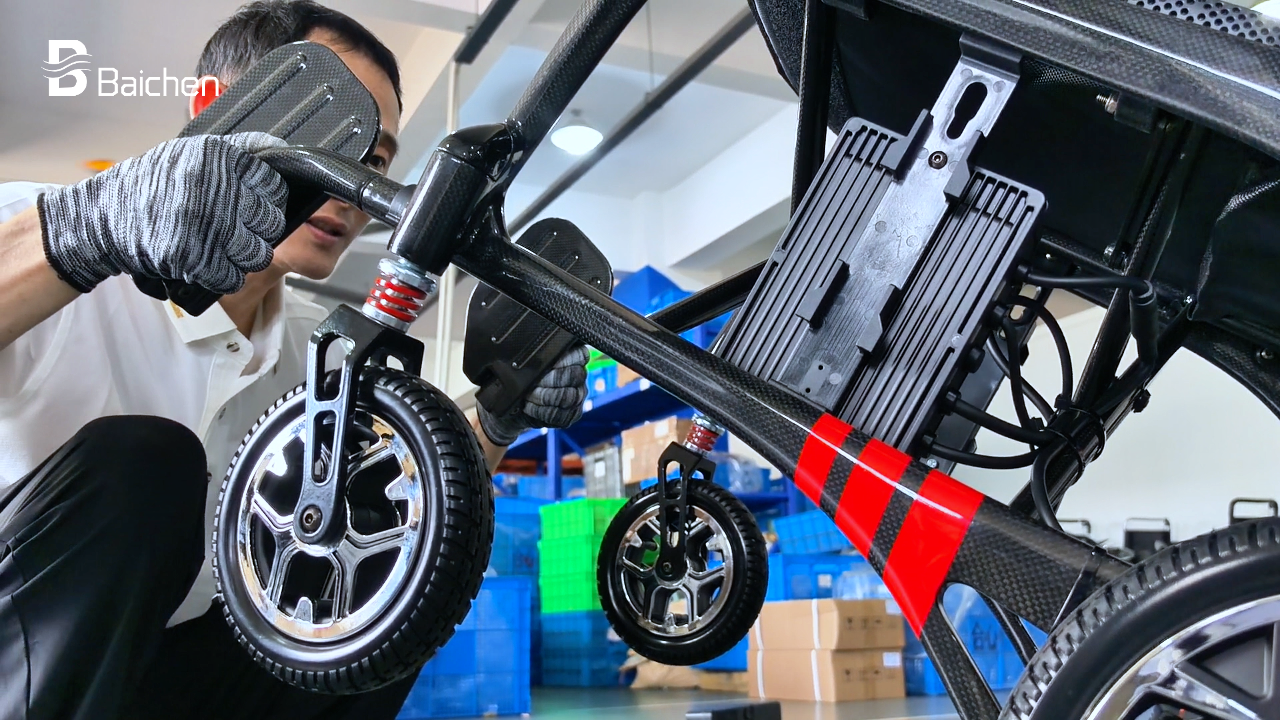
The frame carries the user, batteries, motors and dynamic loads generated by turning, braking, slopes and uneven surfaces. Different materials require different manufacturing controls. When you buy from a factory, you should not judge all frames with one checklist.
For metal frames, examine material identification, tube or casting condition, fixtures, joint preparation, weld consistency, distortion control and finish preparation. Check whether holes, brackets and mounting points line up without forced assembly. A part that must be pulled into position during assembly can create stress and long-term inconsistency.
For carbon fiber structures, review material storage, layup control, mold condition, cure records, trimming, bonding and inspection for surface or internal defects. A glossy finish is not proof of a sound laminate. The relevant questions are whether the process is defined, whether critical bonding surfaces are prepared consistently and whether finished structures are checked against acceptance criteria.
Frame material also affects the distributor's market positioning. On Baichen's site, buyers can examine aluminum power wheelchairs, steel power wheelchairs, magnesium power wheelchairs and carbon fiber power wheelchairs as separate groups. During an audit, however, the focus should be the exact construction and process used for the selected model, not a broad statement about the material category.
Test the electrical system as a complete chair
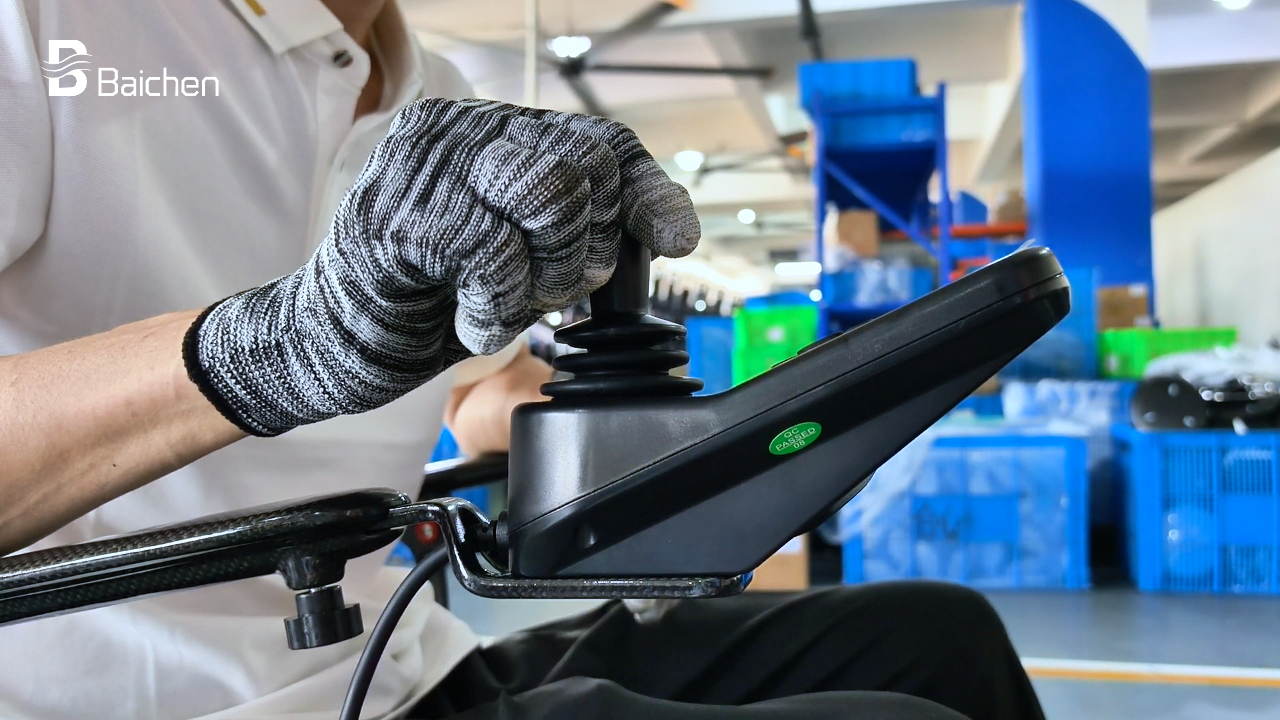
Begin the electrical review with a practical question: does this exact set of parts work together? A recognizable battery or controller name helps with identification, but it does not answer how the battery, joystick, motors, brakes, charger, wiring and protection logic interact. Run the checks on the supplied configuration and record the result against that configuration.
Run a complete operating sequence with the factory team: power-up, acceleration, deceleration, forward and reverse travel, turning, braking, freewheel or clutch use, charging and error response. Include the awkward moments, not only a smooth showroom drive. Release the joystick, stop on an appropriate slope, interrupt power under controlled conditions and watch the response. Finish by tracing cable protection around hinges, folding joints and moving footrests.
For battery systems, confirm the label, connector, enclosure, fixation and removal method. Verify that the manual explains charging, storage and safe handling for the supplied battery. Battery shipping and passenger travel are separate questions and may require model-specific documentation. Avoid accepting a general statement such as "airline approved" without the battery rating, test information and airline review process.
Ask how firmware, controller parameters or electronic component revisions are controlled. A change that appears minor can affect driving feel, speed behavior, braking or compatibility with spare parts. You should receive notice when a controlled characteristic changes.
Ask to see the tests and the records behind them
Test equipment in a showroom proves little unless it is connected to routine production. Ask the electric wheelchair manufacturer which tests apply to design validation, incoming inspection, in-process control and final inspection. These are different layers.
Design validation investigates whether a design can meet its requirements. Production inspection checks whether current units match the approved design. A factory should not use a one-time laboratory result as a substitute for daily function checks, and it should not present a brief final drive test as complete product validation.
For the model under audit, request a test matrix. Depending on the product and market, it may address dimensional checks, static stability, dynamic stability, braking, obstacle behavior, fatigue, impact, electrical safety, electromagnetic compatibility, climatic exposure, battery safety and labeling. ISO publishes the ISO wheelchair standards catalogue, including the ISO 7176 family, but applicability must be determined for the specific device, configuration and jurisdiction. We encourage buyers to confirm current requirements with qualified regulatory professionals rather than copying a competitor's certificate list.
Then inspect actual production records. Select finished serial numbers and trace their inspection results. Records should identify the unit or batch, date, inspector, criteria and disposition. A sheet filled with identical marks is not necessarily false, but the auditor should test whether the data can be connected to a physical product and whether failed results lead to documented action.
Calibration matters as well. Review whether measuring and test equipment is identified, maintained and calibrated at appropriate intervals. The objective is not to demand a laboratory for every check. It is to ensure that important acceptance decisions are based on suitable, controlled tools.
Frequently asked questions
What is the best starting point for an electric wheelchair quality control audit?
Choose one identified model in current production and trace its materials, assembly instructions, inspections, tests, defects and packed configuration. This exposes gaps that a general tour can hide.
Should every wheelchair component use the same inspection method?
No. Inspection method and frequency should reflect safety significance, failure history, supplier performance and the effect of a defect. Cosmetic and safety-related parts need different controls.
Does a final drive test prove product quality?
A drive test is useful, but it cannot replace design validation, incoming checks, in-process inspection, calibrated measurements and model-specific records. Electric wheelchair quality control needs evidence from all of those layers.
How Baichen can help
A useful quality review should leave you with more than a good impression. It should give your team a clear model identity, visible checkpoints and records that can be compared with the approved sample. If you plan to visit or evaluate Baichen remotely, send us the target model, market and the risks that matter most to you through our contact page. We can prepare the relevant production path so your time is spent on evidence, not a rehearsed tour.

Copyright © Ningbo Baichen Medical Devices Co., Ltd. All Rights Reserved- Privacy Policy-Blog

 EN
EN