
Electric Wheelchair OEM vs ODM with a Manufacturing Partner
While the users of electric wheelchairs in nursing homes are the elderly, the people who interact with them most frequently are often the caregivers. Caregivers are the most qualified to judge the usability of a wheelchair. The Baichen research team recently visited several nursing homes and engaged in in-depth conversations with frontline caregivers, extracting three core needs for electric wheelchairs in institutional settings from their feedback: ease of cleaning, foldability, and corrosion resistance. These voices from the front lines of care are guiding Baichen's product design.
I. Ease of Cleaning: The First Line of Defense for Hygiene and Safety
The unique environment of nursing homes means that meals, medications, and even sudden vomiting can contaminate wheelchairs. Caregivers generally report that the ease of cleaning wheelchairs directly impacts their workload and infection control levels.
“Some wheelchairs have many seams in the seat cushions, and the fabric absorbs water. If an elderly person accidentally spills soup, the entire cushion has to be removed for washing, and it takes several days to dry,” said a caregiver with eight years of experience. “We especially want wheelchairs with smooth surfaces and few seams, so they can be cleaned with a simple wipe of a damp cloth.”
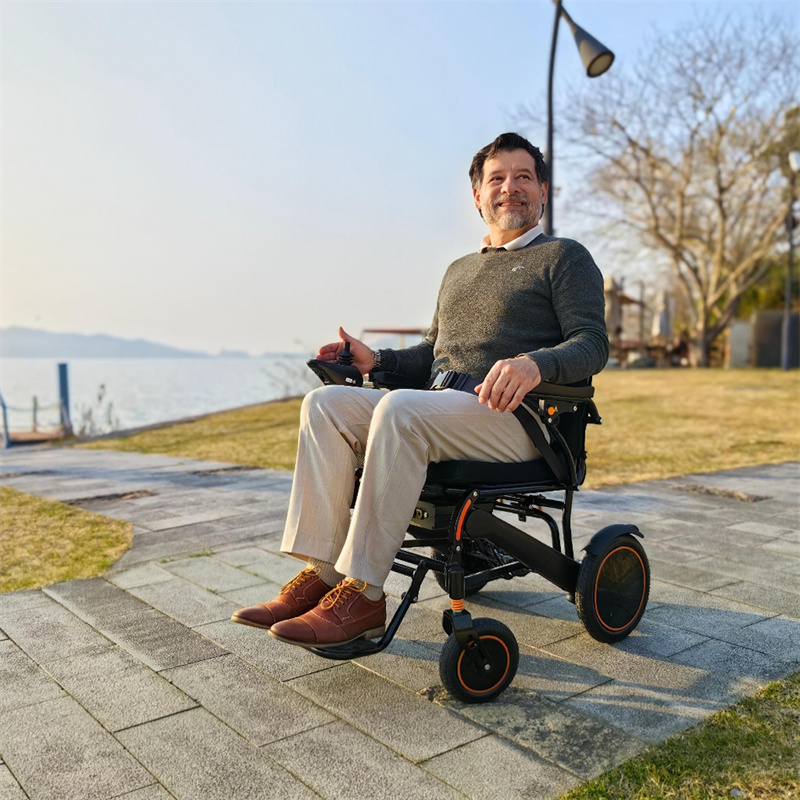
Baichen Nursing Home’s custom-made wheelchairs feature a one-piece molded high-density seat cushion with no seams, making them waterproof and stain-resistant. Daily stains can be removed with a damp cloth. The backrest and armrests have a detachable snap-on design, allowing for tool-free removal for individual cleaning and disinfection. The frame tubing is also internally sealed to prevent liquid seepage and corrosion.
II. Easy Folding: Freeing Up Space and Reducing Physical Burden
Nursing homes generally face a shortage of storage space. Corridors, elevators, and activity rooms all need to accommodate wheelchairs, and large numbers of wheelchairs need to be stored together at night or during mealtimes.
Caregivers report that the ease of folding, the stability and uprightness after folding, and the ability to operate with one hand are key indicators of a wheelchair’s “friendliness.” “Some wheelchairs require bending over to find two levers and then kicking them with your foot to fold. Folding them ten or more times a day is unbearable for my back,” a male caregiver frankly stated.
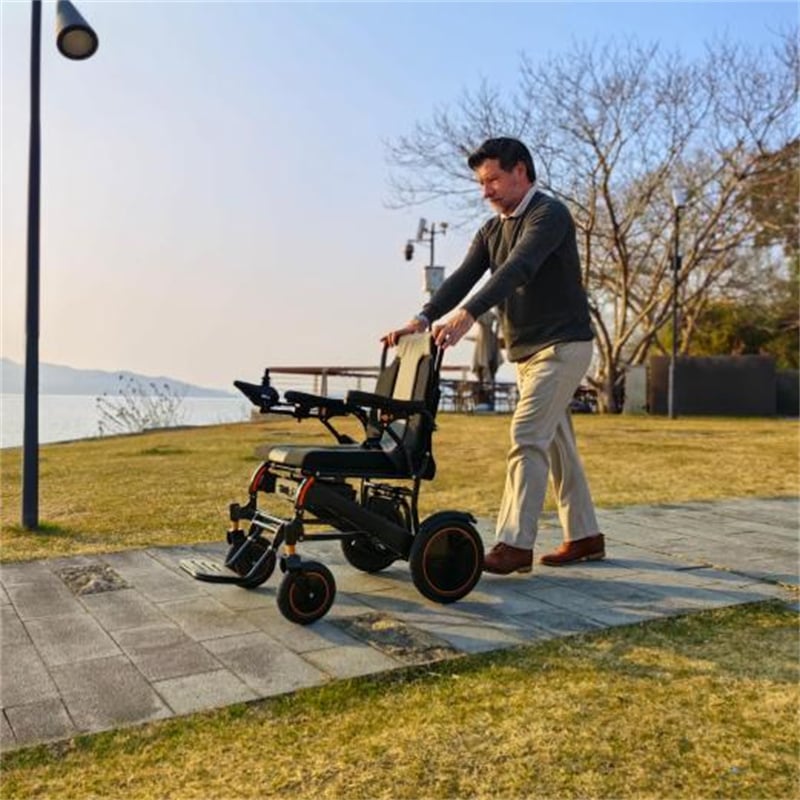
The Baichen nursing home series uses a one-click folding mechanism. Caregivers can fold the wheelchair by lifting the seat cushion with one hand, without bending over or any additional operations. After folding, the wheelchair can stand upright on its own, independent of walls, making it easy to push into the storage area. The total weight is kept under 18 kg, allowing female caregivers to easily lift and place it in the storage room.
III. Corrosion Resistance: Meeting the Rigid Needs of High-Frequency Disinfection Nursing homes disinfect wheelchairs multiple times a day, especially during the pandemic, with chlorine-based disinfectants, alcohol, and ultraviolet light being used in rotation. The paint, screws, and bearings of ordinary wheelchairs are easily damaged in such an environment.
“We used a batch of iron alloy wheelchairs before, and the frame rusted in less than six months, making a squeaking sound when pushed. We eventually discarded them all,” a nursing home logistics manager said helplessly.
Addressing this pain point, Baichen's wheelchairs supplied to nursing homes feature an all-aluminum alloy frame with automotive-grade electrophoretic coating, passing over 500 hours of salt spray testing and showing no significant corrosion from daily contact with alcohol and 84 disinfectant. Screws and bearings are made of 304 stainless steel to prevent rust and jamming. The plastic parts of the armrests and footrests are infused with UV-resistant components, preventing brittleness and discoloration from prolonged UV exposure.
IV. What else do caregivers want? More details mentioned
Besides the three core features mentioned above, caregivers also expressed some "small but beautiful" expectations:
Quick-flip footrests: When lifting the elderly into or out of bed, the footrests can quickly flip open to the sides to prevent tripping;
Adjustable push handle height: Caregivers of different heights have different wrist angles when pushing the wheelchair; an adjustable handle reduces strain;
Wheelchair self-locking mechanism: Prevents the wheelchair from accidentally sliding when temporarily parked;
Large storage bag: Convenient for the elderly to carry medications, drinking water, etc., when going out, avoiding frantic activity.
The Baichen product team has incorporated these needs into the development list for the next generation of wheelchairs specifically designed for nursing homes, with features like "quick-flip pedals" and "large storage bags" already standard in the new model.
Baichen's Actions: Letting Design Listen to Frontline Voices
Nursing homes are one of the most real and frequent usage scenarios for electric wheelchairs. The daily operational experience of caregivers is the most valuable source of feedback for product improvement. Baichen has established a "Caregiver Co-creation Program" with 12 nursing homes nationwide, regularly collecting user feedback and improvement suggestions from frontline caregivers.
In 2026, Baichen plans to launch its third-generation electric wheelchair specifically for nursing homes. Building upon its easy-to-clean, foldable, and corrosion-resistant features, it will further incorporate antibacterial armrest materials and a quick-release battery design, making it easier for caregivers and more comfortable for the elderly.
If you are a manager of a nursing home or a frontline caregiver, please contact Baichen for a quote and a sample. We will assign a specialist to work with you and collect your feedback for product iteration. Truly good wheelchairs are not conceived by designers in a laboratory, but rather "pushed" out by caregivers with their own hands.
Ningbo Baichen medical Devices Co.,LTD.,
+86-18058580651
Baichenmedical.com/baichenmobility.com

Copyright © Ningbo Baichen Medical Devices Co., Ltd. All Rights Reserved- Privacy Policy-Blog

 EN
EN