
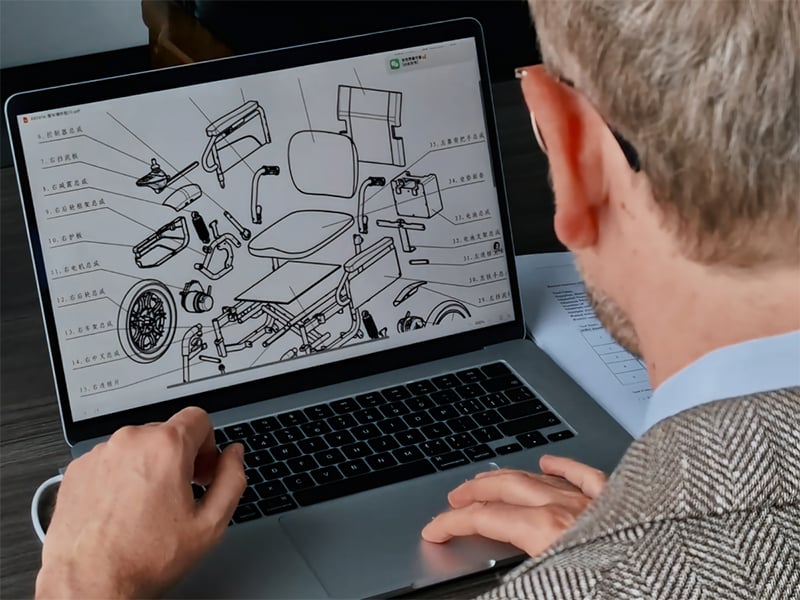
Electric Wheelchair OEM vs ODM with a Manufacturing Partner
A Perfect Balance of Reliability and Economy
In the design of ferroalloy electric wheelchairs, the combination of electronic brakes and mechanical handbrakes has become the mainstream choice in the industry. The successful adoption of this braking solution reflects a deep consideration of product positioning, usage scenarios, and safety requirements.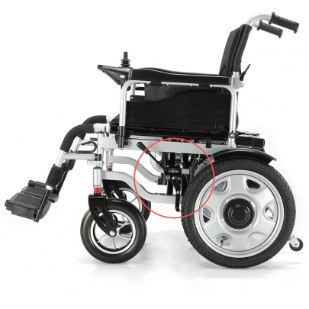
Dual Insurance: The Cooperative Working Mechanism of Electronic Brakes and Handbrakes
The electronic braking system achieves braking through controller commands, automatically activating when the user releases the control lever. This electromagnetically based braking method responds rapidly, completing the braking action within 0.5 seconds, providing basic protection for daily use. Its unique power-off self-locking characteristic ensures immediate stopping even in the event of a power outage, effectively preventing rollover accidents on slopes.
The mechanical handbrake, as an independent safety redundancy system, adopts a traditional wire-driven structure. The user manually locks the wheels mechanically. This purely physical system is completely independent of power supply, providing a reliable backup in case of electronic system failure. Real-world testing data shows that a properly used handbrake can stably stop on a 30-degree slope for over 4 hours.
A Precise Balance of Cost and Effectiveness: The core positioning of the iron alloy electric wheelchair is economical and practical, and the electronic brake + handbrake solution perfectly aligns with this concept. Compared to a full hydraulic braking system, this combination can reduce manufacturing costs by approximately 40%, allowing the overall price of the wheelchair to be kept within the target range of $300-$500.
Deep Adaptation to Usage Scenarios: In fixed locations such as nursing homes, the automatic parking function of the electronic brake greatly facilitates caregiving work. When caregivers need to leave briefly, the wheelchair automatically remains stationary, preventing accidental movement. The handbrake provides additional safety during transport or long-term parking.
For elderly users at home, simple operating logic is particularly important. The electronic brake requires no learning curve, and the intuitive mechanical operation of the handbrake aligns with the usage habits of the elderly. This design lowers the technical threshold, allowing users of varying cognitive levels to use it safely.
Users in hilly terrain especially need this dual protection. The electronic brake provides timely dynamic braking, while the handbrake ensures stability during long-term parking. In the mountainous regions of Southeast Asia, this configuration demonstrates unique practical value.
Technical Reliability and Maintenance Considerations
The electronic braking system features a sealed design, effectively preventing dust and moisture intrusion. Under normal operating conditions, its lifespan can reach 3-5 years. It is recommended to perform a system check every 6 months to ensure sensor sensitivity.
The handbrake system requires more frequent maintenance. Due to the weight of the alloy wheelchair, the handbrake cable experiences significant tension. It is recommended to check the tension every 3 months. In rainy and humid areas, special attention should be paid to rust prevention of the cable, and a special lubricant should be applied regularly.
Brake pad wear monitoring is also crucial. Electronic brake pads typically need replacement after 1500 kilometers, while handbrake pads have a replacement cycle of approximately 2000 kilometers. Users can determine replacement time by observing abnormal noise or increased braking distance.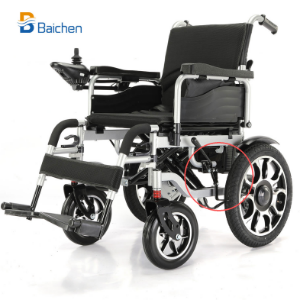
Target Audience and Purchase Recommendations
Budget-sensitive individual users can confidently choose this configuration. Its economy and reliability have been market-proven, and maintenance costs are controllable. It is recommended to focus on the handbrake's operating force and choose a model with a wide adjustment range.
Medical institutions should prioritize system durability when purchasing. For high-frequency use environments, it is recommended to choose a reinforced electronic brake module and establish a regular maintenance schedule. Models equipped with brake wear indicators should be given priority.
Users in rural areas need to pay special attention to the system's environmental adaptability. Choosing a waterproof electronic brake and a rust-proof handbrake system will better handle complex operating environments.
Ningbo Baichen medical Devices Co.,LTD.,
+86-18058580651

Copyright © Ningbo Baichen Medical Devices Co., Ltd. All Rights Reserved- Privacy Policy-Blog

 EN
EN