
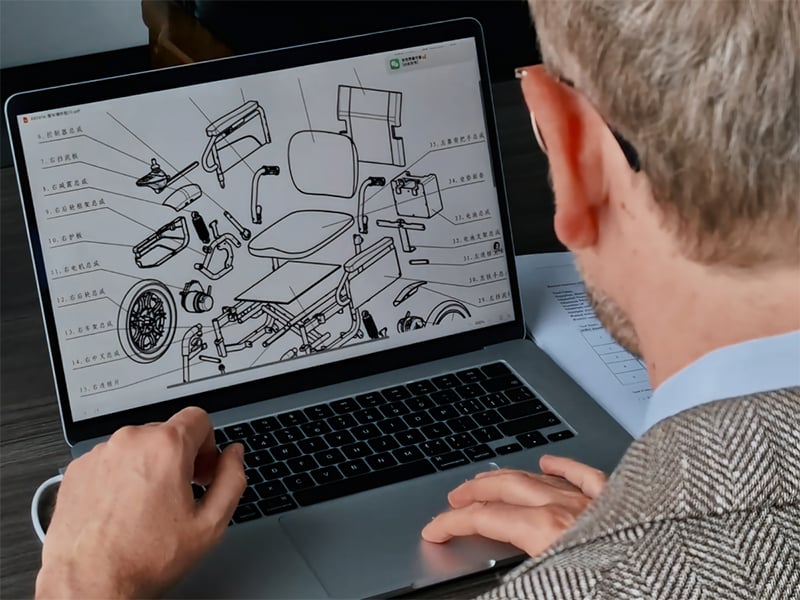
Electric Wheelchair OEM vs ODM with a Manufacturing Partner
In the modern personal mobile device market, the choice between three-wheeled and four-wheeled electric mobility vehicles has become a crucial part of the consumer decision-making process. These two structural designs embody different engineering philosophies and exhibit unique value advantages in different usage environments.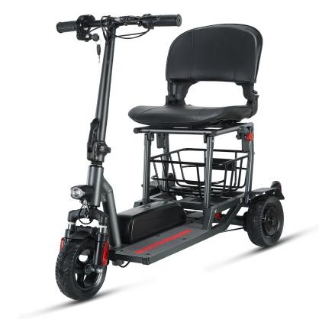
Structural Design and Stability Analysis
Three-wheeled mobility vehicles use a single front and double rear wheel configuration or a double front and single rear wheel configuration, with their outstanding advantage being superior handling agility. With a smaller turning radius, three-wheeled models can maneuver freely in 1.2-meter-wide passageways, making them excellent for supermarket shopping or indoor mobility. However, it should be noted that this design can produce some body roll when cornering at higher speeds; it is recommended to maintain a speed below 10 km/h.
Four-wheeled mobility vehicles offer superior driving stability through a symmetrical four-point support structure. Actual testing shows that four-wheeled models maintain stability even on a 15-degree incline, with approximately 40% better rollover resistance than three-wheeled models. Additional support points not only enhance load-bearing capacity but also provide more possibilities for storage space design; some four-wheeled models can carry a maximum load of 15 kg.
Usage Scenarios and Terrain Adaptability
In urban environments, the flexibility of three-wheeled mobility scooters is fully demonstrated. Their compact body facilitates maneuvering through dense crowds, and their relatively light weight (generally between 25-35 kg) is also more conducive to vehicle transport. For the elderly living in high-rise buildings, three-wheeled models offer greater ease of maneuverability in elevators and corridors.
Four-wheeled mobility scooters perform better in handling complex road conditions. The reinforced suspension system and larger tire contact area allow them to easily handle paved roads, gentle slopes, and slightly rugged terrain. For users who frequently travel in parks and rural roads, the smooth riding experience offered by four-wheeled models is a significant advantage.
Performance and Technical Parameter Comparison
In terms of range, four-wheeled mobility scooters, due to the ability to be equipped with larger capacity batteries, generally have a range of 20-25 kilometers, approximately 20% higher than comparable three-wheeled models. This difference has a significant impact on users with a wide range of activities.
Handling characteristics also differ noticeably. Three-wheeled vehicles use axle steering technology, making them easier and more agile to operate; four-wheeled vehicles are mostly equipped with differential steering systems, requiring slightly more effort to operate, but providing more precise control of the driving trajectory. This difference is particularly important for users with reduced upper body strength.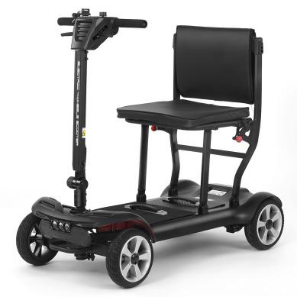
Target Audience and Purchase Guidelines
Users in rural areas should prioritize four-wheeled vehicles. Enhanced passability and stability allow for better adaptation to unpaved road conditions. It is recommended to choose models with higher ground clearance and deep tire tread patterns.
Heavier users (over 100 kg) are advised to choose four-wheeled mobility scooters. Their reinforced frame structure and more balanced load distribution provide more reliable safety. Some four-wheeled vehicles designed for heavy loads can carry up to 150 kg.
Users who frequently travel long distances can benefit from the longer range of four-wheeled vehicles. At the same time, the more spacious seat design and better shock absorption also improve comfort during long journeys.
Users with limited living space may prefer three-wheeled vehicles. Their smaller turning radius facilitates use in confined spaces, and their lighter weight makes daily storage and management easier.
Through this system analysis, we hope to help consumers make the most suitable choice between flexibility and stability based on their individual needs, ensuring that every user can find a mobility solution that best suits their lifestyle.
Ningbo Baichen medical Devices Co.,LTD.,
+86-18058580651

Copyright © Ningbo Baichen Medical Devices Co., Ltd. All Rights Reserved- Privacy Policy-Blog

 EN
EN