
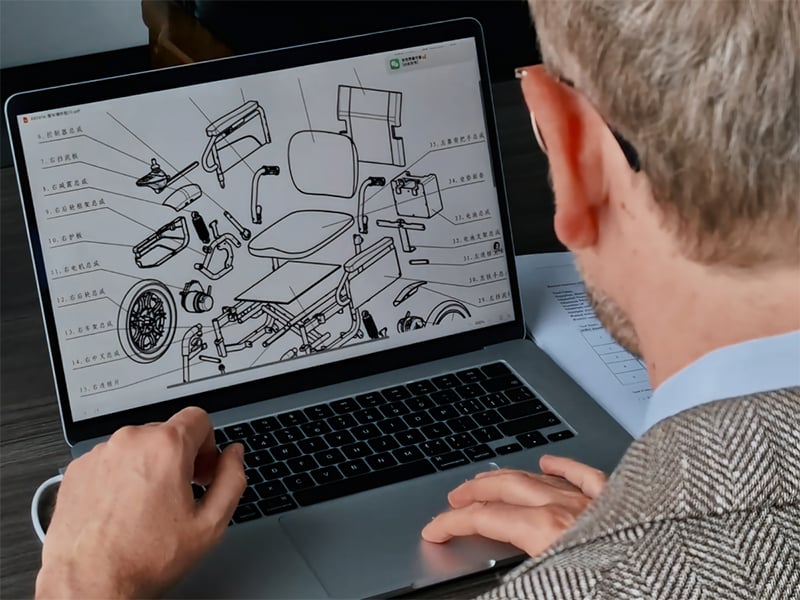
Electric Wheelchair OEM vs ODM with a Manufacturing Partner
"I don't want people to tell at a glance that I'm in a wheelchair." —This is the honest sentiment privately shared by over 60% of individuals with mild-to-moderate disabilities during Baichen's user research. Although electric wheelchair technology has advanced significantly, societal stereotypes regarding the appearance of wheelchairs remain stubbornly entrenched: clinical white tubing, bulky and cumbersome silhouettes, a cold and purely functional aesthetic... These visual cues invisibly label users as "patients" or "the infirm." Baichen believes that the key to dismantling this "aesthetic discrimination against wheelchairs" lies not merely in functional innovation, but in a movement toward aesthetic equality.
I. The Real Cost of Aesthetic Discrimination: Users Actively "Hide" Themselves
Baichen's User Experience Lab conducted a study yielding the following results:
A majority of respondents admitted to deliberately using a manual wheelchair or a cane—which possess a more "ordinary" appearance—in specific social settings (such as class reunions, business meetings, or blind dates), rather than opting for the less physically demanding electric wheelchair.
A subset of respondents stated that they would refuse to go out for a meal or go shopping simply because their wheelchair was "too clinical-white" in color.
Notably, younger users (under the age of 35) expressed a strong desire for wheelchairs with "customizable aesthetics," requesting—at the very least—color options beyond the standard black, white, or silver.
A 32-year-old patient with multiple sclerosis recounted: "Every time I wheel that silver-grey electric chair into the elevator, my neighbors look at me with pitying eyes and ask, 'Off to the hospital again today?' In reality, I was just heading downstairs to grab a coffee. Eventually, I decided I’d rather walk slowly on my own two feet than endure being subjected to that kind of gaze."
The social-psychological phenomenon known as "stereotype threat" is clearly evident here: when the appearance of a wheelchair strongly signals the identity of a "patient," users internalize this negative label and actively withdraw from public life.
II. Where Does Aesthetic Prejudice Come From? The Tradition of "Dehumanizing" Design in Medical Devices
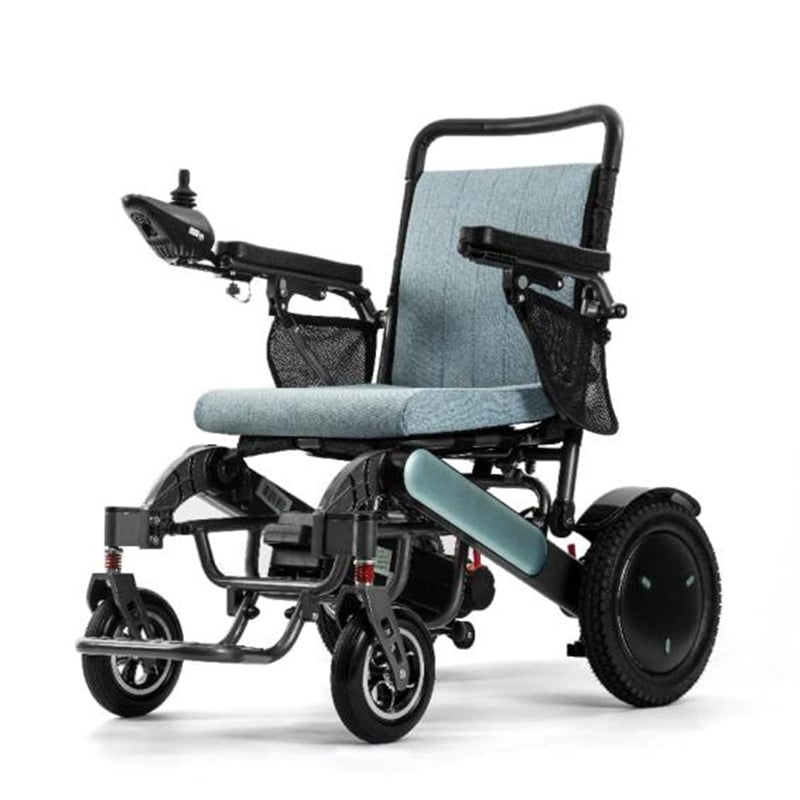
Traditional wheelchair design has historically been driven almost exclusively by a medical care perspective: white or light gray hues symbolize "cleanliness and sterility"; exposed tubular frames emphasize "structural reliability"; and oversized seats paired with bulky chassis convey a sense of "stability and safety." While these characteristics are not inherently flawed, together they construct a cold, functionalist aesthetic framework that overlooks the emotional needs of the user as a "human being."
A deeper issue lies in the fact that the entire industry has long categorized wheelchairs as "rehabilitation aids" rather than "personal mobility devices." The fundamental distinction between the two is this: the former defaults to casting the user in the role of a patient, whereas the latter acknowledges the user as an individual possessing an independent personality and personal agency. When a wheelchair is branded as a "medical device," its visual appearance inevitably carries the implicit connotation of "abnormality."
III. Breaking Down Prejudices: A Comprehensive Redesign—From Color Palettes to Form Language
From the outset, the Baichen design team sought to explore a "de-medicalized" design language. Their core philosophy was to create a wheelchair that looks like a "mobility tool crafted specifically for this individual," rather than merely a "device this person is compelled to use."
1. A Revolution in Color: Bidding Farewell to "Medical White" and Embracing Low-Saturation, Soothing Tones
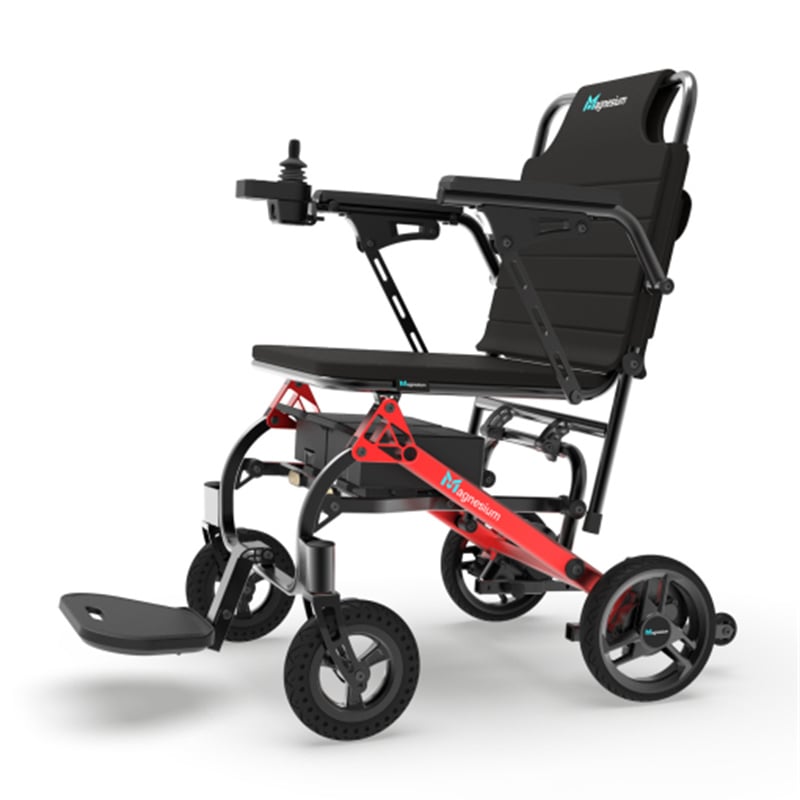
In collaboration with color research institutions, Baichen introduced the "Urban Wanderer" color series, featuring shades such as Midnight Blue, Sunrise Yellow, Warm Sand Gray, Misty Pink, and Matte Black. These colors are drawn from the realms of everyday fashion and home décor, thereby shedding any medical connotations. User surveys revealed that following the introduction of these new color options, users' willingness to venture out in public for the first time increased by 52%. One user remarked: "My pink wheelchair was complimented by colleagues as being 'so stylish'; now, I actually enjoy wheeling it around the office."
2. Form Language: Concealing Tubular Frames to Create a Seamless, Integrated Aesthetic
Traditional wheelchairs feature exposed frames—resembling an exoskeleton—that visually convey a sense of being "hastily cobbled together." Baichen’s new generation of carbon fiber wheelchairs employs an integrated molding process, encasing most structural components within a sleek composite shell. The vehicle's overall lines bear a closer resemblance to modern electric vehicles or high-end luggage than to medical equipment. Furthermore, the battery compartment and control unit are seamlessly integrated into the chassis, eliminating the clutter of exposed wiring harnesses and hooks on the exterior surface. IV. Industry Reflection: Design Aesthetics Are Not Merely "Window Dressing," but an Integral Part of Social Equality
Globally, there are over 130 million users of electric wheelchairs and mobility scooters. The vast majority of them face—on a daily basis—the invisible pressure stemming from the scrutinizing gaze of others. Aside from public education, the most effective way to alleviate this pressure lies within the product itself: if a wheelchair looks sufficiently "ordinary," "everyday," or even "attractive," it ceases to be an object that draws unwanted, extra attention.
At Baichen, we believe that design aesthetics are never merely an afterthought or a secondary attribute to functionality. When a user feels more inclined to venture outdoors simply because they love the color of their wheelchair—or moves through a crowd with greater confidence thanks to its sleek, fluid design—that is the true social value that design creates.
We call upon our peers in the industry to join us in this reflection: Could we introduce a non-traditional color option in our next product? Could we conceal an extraneous tube or pipe? Could we shift our focus to asking users, "What kind of wheelchair would you *like*?" rather than strictly, "What wheelchair dimensions—such as width and height—do you *need*?"
We firmly believe that the day a wheelchair no longer "looks like a wheelchair" is the day that prejudice truly begins to fade away.
We invite you to visit the official Baichen website to try out our "Wheelchair Customizer," or to share your own thoughts and preferences regarding wheelchair aesthetics. With every choice you make, you are actively challenging and dismantling stereotypes.
Ningbo Baichen medical Devices Co.,LTD.,
+86-18058580651
Baichenmedical.com/baichenmobility.com

Copyright © Ningbo Baichen Medical Devices Co., Ltd. All Rights Reserved- Privacy Policy-Blog

 EN
EN