 EN
EN
Defining the Mobility Manufacturing Landscape
In the global medical device industry, sourcing from a Chinese factory often involves a strategic choice between two primary business models: OEM (Original Equipment Manufacturing) and ODM (Original Design Manufacturing). For distributors and brands partnering with Baichen Medical, understanding these nuances is critical for budgeting and brand positioning.
At our 20,000㎡ Jinhua Yongkang factory, established in 1998, we have evolved to support both models with equal sophistication. Whether you are an Amazon Power Seller looking for a private label "plug-and-play" solution or a high-end medical brand requiring a completely new frame geometry, the choice between OEM and ODM will dictate your operational roadmap.
Wheelchair OEM: The Power of Your Blueprint
OEM (Original Equipment Manufacturing) is the model where the client provides the design, and the factory provides the production muscle. You own the Intellectual Property (IP); we own the manufacturing expertise.
For B2B buyers, the OEM model is ideal if you have a proprietary engineering team but lack the heavy machinery found in our facility—such as our 60 sets of frame processing equipment or our 18 injection molding machines.
Key Characteristics of Wheelchair OEM at Baichen:
· Customer-Owned Tooling: If you design a revolutionary new folding hinge for a model like the BC-EM808, we build the molds according to your specs.
· Total Specification Control: You define every detail, from the grade of magnesium alloy to the specific programming of the sine wave vector controller.
· High Upfront R&D: The burden of testing and FDA 510(k) submission (for new designs) typically falls on the client.
Wheelchair ODM: Leveraging Our R&D Heritage
ODM (Original Design Manufacturing) is often called "Private Labeling" or "White Labeling." In this model, Baichen designs and engineers the product, and you lease or buy the right to sell it under your brand.
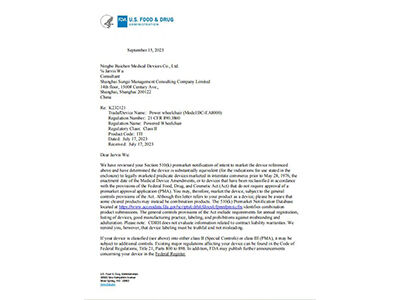
For 70% of our B2B partners, the ODM model is the superior choice. It allows you to leverage our 28 years of experience without the multi-million dollar R&D bill. Our K232121 and K250475 FDA registrations are already in place for our ODM models, allowing for a rapid North American launch.
The Baichen ODM Advantage:
· Low Barrier to Entry: With an MOQ of just 1 unit, distributors can test the market with models like the BC-EC8003 carbon fiber wheelchair before committing to a full container.
· Rapid Sample Cycle: We can deliver customized samples with your logo and color scheme in just 7 working days.
· Proven Safety: Our ODM models are already tested to EN 12184 and ISO 7176 standards.
OEM vs ODM: A B2B Decision Matrix
Choosing the right model depends on your company’s maturity, budget, and long-term goals.
| Feature | OEM (Contract Mfg) | ODM (Private Label) |
| Product Design | Client Provided | Baichen (Factory) Provided |
| Intellectual Property | Client Owned | Baichen Owned (License to Client) |
| Time to Market | 6 - 12 Months | 2 - 4 Weeks |
| Development Cost | High ($50k - $200k+) | Low to Zero |
| MOQ Requirements | Higher (usually 200+ units) | Low (MOQ 1 unit) |
| Regulatory Burden | Client leads FDA/CE process | Baichen provides FDA/CE files |
| Branding | Your Logo/Design | Your Logo on our Chassis |
Baichen’s Hybrid Customization: The "Middle Path"
While the industry speaks in "black and white" (OEM vs ODM), Baichen offers a flexible "Middle Path" that many distributors find most profitable. We allow for significant modifications to our existing ODM platforms.
For example, a distributor might choose our BC-EA9000-UP heavy-duty platform (ODM) but request "Semi-OEM" modifications:
1. Electronics Tuning: Programming the controller for specific acceleration curves suitable for geriatric care.
2. Material Swaps: Upgrading to a specific breathable 3D-mesh fabric on the seating.
3. Aesthetic Branding: Using our US-imported Binks painting line to match your corporate color palette exactly, combined with laser-etched logos on the magnesium frame.
This hybrid approach allows you to have a "custom" product without the risks associated with pure OEM development.
The Role of ISO 13485 in Both Models
Regardless of whether you choose OEM or ODM, the "factory engine" remains the same. Baichen operates under a strict ISO 13485 Medical Device Quality Management System.
This is non-negotiable for B2B procurement, especially for hospital tenders and nursing home supply chains. It ensures that the BC-MS3331 scooter you buy today meets the same safety tolerance as the one we produced for Costco or Amazon US last year. Our full-chain process—from raw material cutting and bending to UV electroplating and assembly—is audited for consistency.
Protecting Your Investment: Warranty and After-Sales
In the OEM/ODM world, the biggest fear for a distributor is "factory abandonment"—the factory moves on to a new model and stops supporting the old one.
Baichen mitigates this risk with our 3-year warranty, one of the longest in the industry. Because we control the entire supply chain, including our own injection molding and frame processing, we guarantee the availability of spare parts for at least 5 years after a model's production run ends. This commitment is vital for B2B buyers who need to provide long-term service-level agreements (SLAs) to hospitals and clinics.
Frequently Asked Questions
Q1: Can I start with ODM and transition to OEM later? Yes. Many clients start by private labeling our BC-EA5516B aluminum wheelchair. Once they reach a volume of 2,000+ units per year, they often invest in their own unique tooling for a proprietary frame design, transitioning into a full OEM partnership.
Q2: Who pays for the FDA 510(k) in an ODM arrangement? In an ODM arrangement, Baichen typically holds the primary 510(k) (like K232121). We provide a Letter of Authorization (LOA) that allows you to register your brand as a "re-labeler" or "re-packager" with the FDA, which is much faster and cheaper than a new submission.
Q3: How much does a custom wheelchair mold cost for an OEM project? It varies widely. A simple plastic component mold might cost $3,000, while a full magnesium alloy die-casting mold for a frame can exceed $50,000. This is why ODM is the preferred choice for 90% of new startups.
Q4: Do you offer exclusive rights for ODM models? Yes. For specific regions (e.g., "Exclusive Distributor for France"), we can offer exclusivity based on an agreed annual purchase volume. This prevents other local dealers from selling the exact same Baichen model under a different brand.
Q5: Can I visit the factory to audit the OEM production line? Absolutely. We encourage on-site audits at our Jinhua Yongkang facility. For clients who cannot travel, we offer live video inspections of our 4 assembly lines and testing labs.
Conclusion & Next Step
The choice between wheelchair OEM and ODM is a balance of "Control vs. Speed." If you want absolute design uniqueness and have the budget, OEM is your path. If you want a proven, FDA-cleared, high-quality product to market in under 30 days, ODM is the winner.
As a manufacturer that serves both Fortune 500 medical brands and agile Amazon startups, Baichen is equipped to scale with you. Contact our B2B Product Manager to receive our latest ODM Catalog or to request an OEM Feasibility Study.
Table of Contents
- Defining the Mobility Manufacturing Landscape
- Wheelchair OEM: The Power of Your Blueprint
- Key Characteristics of Wheelchair OEM at Baichen:
- Wheelchair ODM: Leveraging Our R&D Heritage
- The Baichen ODM Advantage:
- OEM vs ODM: A B2B Decision Matrix
- Baichen’s Hybrid Customization: The "Middle Path"
- The Role of ISO 13485 in Both Models
- Protecting Your Investment: Warranty and After-Sales
- Frequently Asked Questions
- Conclusion & Next Step