
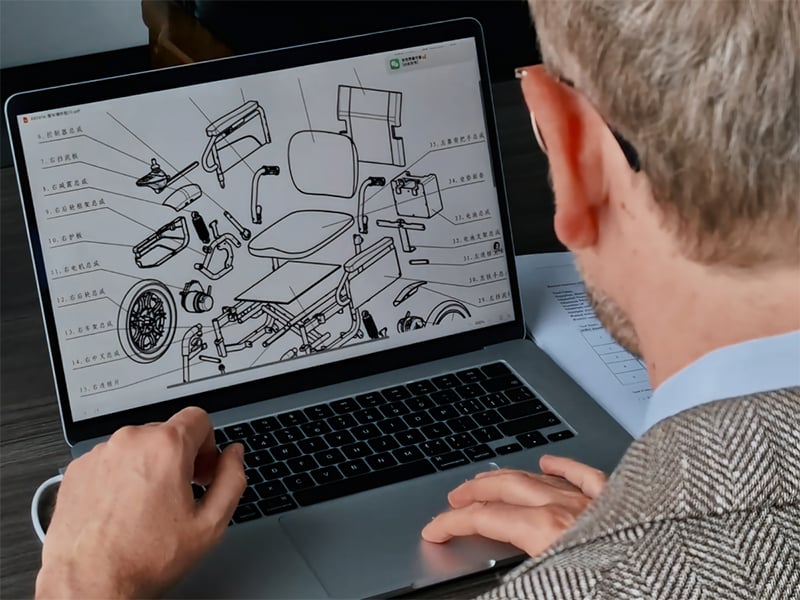
Electric Wheelchair OEM vs ODM with a Manufacturing Partner
Deep Adaptation of Cost, Performance, and Usage Scenarios
In today's rapidly evolving electric wheelchair technology landscape, the combination of ferroalloy electric wheelchairs and lead-acid batteries maintains a solid market position. This seemingly traditional technological pairing actually reflects a precise understanding of the needs of a specific user group.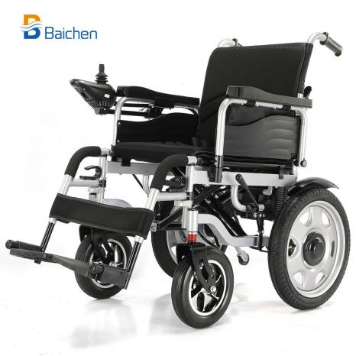
Cost First: Economic Considerations Dominate Design Choices
The core positioning of ferroalloy electric wheelchairs is economic practicality, and lead-acid batteries have a natural advantage in this regard. For the same capacity, the cost of lead-acid batteries is only 30%-40% of that of lithium batteries. This price advantage allows the price of the entire wheelchair to be controlled within the $300-$500 range, perfectly meeting the needs of budget-sensitive users.
For medical institutions and government projects making bulk purchases, this cost difference is even more significant. Purchasing 100 ferroalloy electric wheelchairs with a lead-acid battery solution can save approximately $20,000 compared to lithium batteries, which is highly attractive to public healthcare systems with limited budgets. At the same time, the mature recycling system for lead-acid batteries and their stable residual value further reduce the total life-cycle cost.
Performance Matching: A Perfect Match Between Material Characteristics and Power Requirements
The weight of iron alloy materials typically exceeds 30 kg, a characteristic that reduces the sensitivity to battery weight. While lead-acid batteries are about 60% heavier than lithium batteries of the same capacity, this weight difference has a relatively limited impact on portability in iron alloy wheelchairs. Actual test data shows that iron alloy wheelchairs equipped with lead-acid batteries weigh between 35-40 kg, comparable to aluminum alloy wheelchairs equipped with lithium batteries.
Regarding power requirements, iron alloy wheelchairs are primarily designed for indoor and short-distance use, with relatively relaxed requirements for range. The typical range of 15-20 km for lead-acid batteries is sufficient for daily use in fixed locations such as nursing homes and rehabilitation centers. Their stable discharge characteristics also align perfectly with the robust product positioning of iron alloy wheelchairs.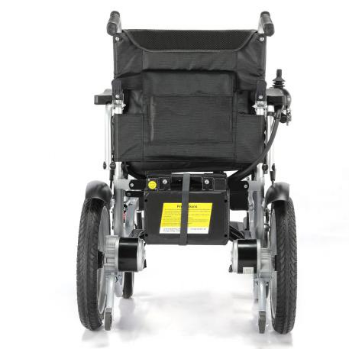
Maintenance Convenience: A Practical Consideration of Infrastructure Adaptability
Another major advantage of lead-acid batteries is their ease of maintenance. In developing regions such as Southeast Asia and Latin America, the maintenance network for lead-acid batteries is quite comprehensive; even small-town appliance repair shops possess basic testing and repair capabilities. This extensive service coverage significantly lowers the barrier to post-purchase maintenance.
In contrast, lithium batteries require specialized battery management systems and repair technicians, often making timely repair services difficult to obtain in areas with underdeveloped infrastructure. This is a key decision-making factor for institutional users who prioritize product durability and ease of maintenance.
Safety Performance: Reliable Guarantee of Mature Technology
Lead-acid batteries have undergone over a century of development, and their safety characteristics have been thoroughly verified. Under abnormal conditions such as overcharging and short circuits, lead-acid batteries react relatively mildly, rarely exhibiting serious safety issues such as thermal runaway. This reliability is particularly important for medical institutions requiring long-term continuous use.
Iron alloy materials inherently possess good flame retardancy and structural stability, complementing the safety characteristics of lead-acid batteries. This combination provides users with double protection, making it particularly suitable for applications with high safety requirements.
Target Audience and Purchase Recommendations
Individual users with limited budgets should prioritize lead-acid battery iron alloy wheelchairs. This combination provides reliable mobility at the lowest cost, making it particularly suitable for stationary use. It is recommended to pay attention to the ventilation design of the battery compartment to ensure good heat dissipation.
Medical institutions and nursing homes are also suitable users for this configuration. Bulk purchasing offers significant cost advantages and simplifies maintenance, effectively controlling operating costs. Regular battery testing is recommended, with timely replacement of aging batteries.
Users in rural areas will find this combination particularly practical. Lead-acid batteries have low environmental requirements and are highly adaptable, functioning even in areas with unstable power supplies. A voltage-stabilized charging system is recommended to extend battery life.
This option is also suitable for users with short-term or temporary needs. Whether for post-operative rehabilitation or temporary mobility impairment, this economical and practical combination can solve problems within a limited budget.
When choosing an alloy-based electric wheelchair, users are advised to rationally assess their needs. If the budget is limited, the usage scenario is fixed, and weight is not a major concern, lead-acid batteries remain a highly cost-effective choice. However, users with specific mobility needs or who seek the latest technology may consider waiting for more innovative solutions to emerge.
Ningbo Baichen medical Devices Co.,LTD.,
+86-18058580651

Copyright © Ningbo Baichen Medical Devices Co., Ltd. All Rights Reserved- Privacy Policy-Blog

 EN
EN