
 EN
EN

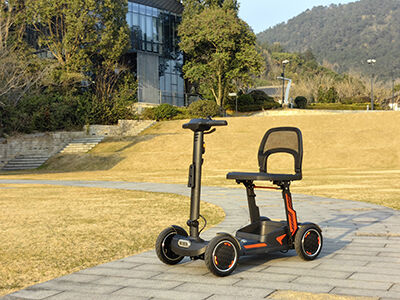
One of the key needs associated with the issue of personal mobility is stability, whose presence directly impacts the safety and comfort of the users of the electric scooters as well as the trust the latter may have in the product. As much as there are many features which enable a ride to be stable, the suspension system can be considered to be among the most crucial components. A suspension is bound to absorb the shocks due to rough surfaces, reduce the vibration taken by the rider or the ground touched by the wheel, and all these will play a crucial role in creating a comfortable and safe ride of the motorcycle.
This paper will address the ways in which the stability of the wheel electric scooters can be achieved, the role that different aspects of the design play towards the production of a reliable platform to the users. Sensitivity to these values will help the potential customers to think about the scooters in the context of their special needs and contexts in which they will be passing through in their daily lives.
The Foundation of Stability: Design Beyond Suspension
Even though the conventional suspension technology is important in most vehicles with mobility, it is important to mention that the stability of the electric scooters can be achieved through numerous engineering approaches. Other manufacturers are focused on a stable platform development based on the other established processes that provide certain workability on various terrains.
Frame Geometry and Weight Distribution
The fundamental pillars of the stability of any electric scooter are the weight distribution, and the structure of the frame. Close placement of the motor parts and the resulting low center of gravity also provide the supplementary center of stability that helps in preventing tipping as a result of turning or on uneven surfaces. The distance between the front and the back wheel, the wheelbase is also influential seriously on the stability with longer wheelbases being a more stable ride but with a price in terms of maneuverability.
Wheel Configuration and Tire Selection
The first is the stability, which is a choice of three or four wheels. The four-wheel scooters offer a more stable position and weight distribution on all four corners which build a fundamentally stable base, which best suits customers who will prefer safety to agility. The three-wheel models are highly turning though they should be well-designed to maintain balance, and different models are designed with a wider rear axle or weight location.
Design of tires also offers stability. Small road bumps can also be absorbed by design in the case of flexible tires which are pneumatic tires (air-filled tires) which can also offer puncture resistance and solid (or foam-filled) tires which may offer puncture protection but can reduce vibration damping. The scooter is sensitive to the diameter and width of tires during roll over abilities of the scooters as well as the entire contact patch of the scooter with the ground.
Engineering for Real-World Conditions
The manufacturers are fixing the stability issues with a comprehensive engineering fix considering how the scooters will work in the actual conditions of application. This is because rather than elaborate suspension mechanisms, most of the successful designs are geared towards coming up with robust well-balanced platforms, which are stable because of their simple designs.
Structural Integrity and Material Selection
Direct effect of a scooter stability and durability also affect materials. Different material possesses diverse merits:
Aluminum provides the car with a good blend of lightness and strength that allows the car to be responsive without reducing its stability.
The most resistant and structurally inflexible material that can be utilized by the user is steel, in case the user required a highly robust form of platform.
The advanced composite may be made to provide some performance characteristics, and a uniform ride experience despite that.
Stability Characteristics of users.
Besides the structural factors, the issue of intelligent design can also help bring stability to practical level. Such features as anti-tip wheels, big foot platforms, and ergonomically placed seats make the ride experience a secure one. The factor of stability is also influenced by the placement and design of controls as a convenient design will allow one to watch where to go and not to worry about the controls on the scooter.
Matching Scooter Design to User Needs
The most appropriate form of stability highly relies on the need and environments of the user:
The congestion of urban travelers may be extremely nimble with the thick spaces, and may need to remain stable on the uneven pavements.
The recreational users tend to attach significance on stability so that they can make long rides on mixed surfaces like pavement, packed trails, and low slopes.
Human beings who have some mobility challenges may have to demand an extraordinary stability where some of their physical needs or medical conditions attract special consideration.
All these can be resolved by different applications of engineering principles discussed above, without necessarily needed to employ the complex suspension systems.
Conclusion: Stability Through Integrated Design
Composite designing based on frame construction, weight distribution and wheel arrangement and ergonomics of the user are significant to get a stable electric scooters with reliable wheels. Despite the concept of suspension systems being among the approaches to addressing imperfection on the road, the number of working solutions of mobility is quite high since the platform is designed with core design principles in mind.
Baichen has a philosophy of engineering that entails coming up with stable and workable mobility solutions through precision manufacturing and attentive design. Our electric wheelchairs and scooters are developed keeping structural integrity and user safety in mind, with assistance of the right materials and structures, we are able to provide the stable platform to be used on the daily routine. We have a vision of offering products of a reliable performance based on basic design principles that are competently implemented..