

Mobility Scooter Inventory Storage Guide for Distributors
A return often begins before the carton is opened
Not every return is preventable; damage, changed circumstances and genuine faults happen. Other cases start with an early gap: the photograph hid the folded shape, “range” became a promise, or nobody measured the doorway. For a dealer trying to reduce electric wheelchair returns, prevention starts before payment.
At Baichen, we sometimes trace the buying path backwards with four cards on a table. The card nearest us is the handover; behind it sit the showroom demonstration, sales conversation and first web page. Staff write remembered promises below the relevant card, then look for the moment when fact became assumption. Nobody uses the exercise to argue against a customer’s right to return. We use it to keep an unsuitable chair away from an unsuitable route in the first place.
Make the product page answer awkward questions
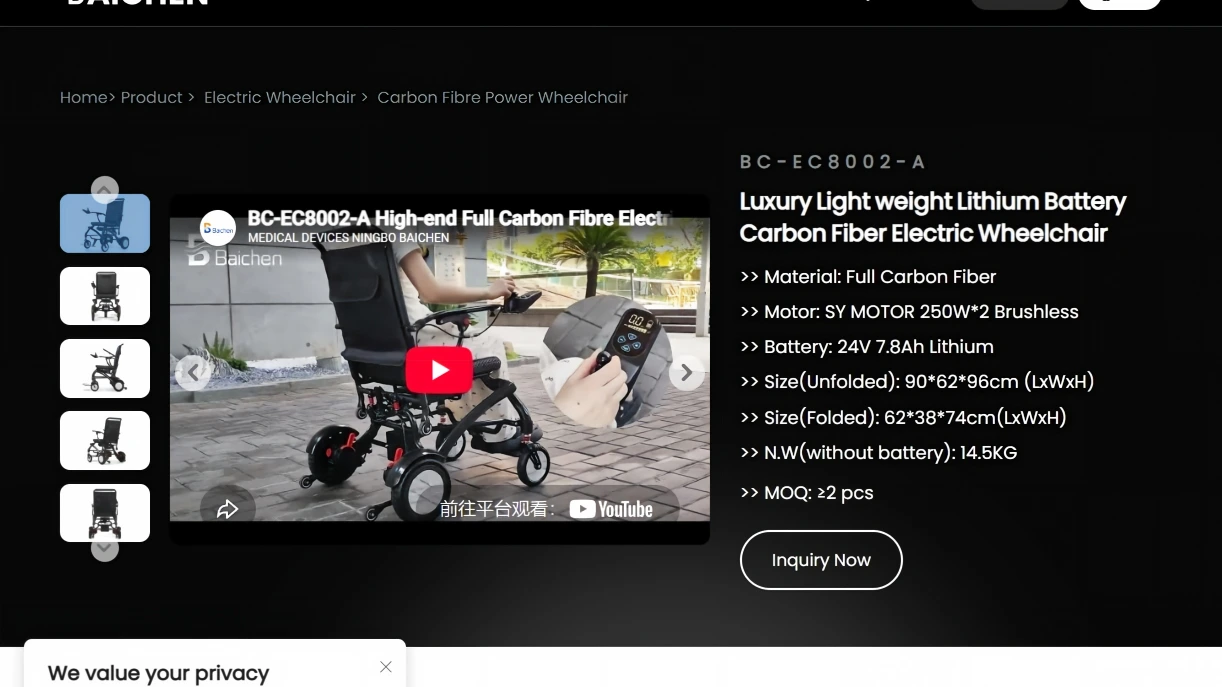
Let the hero image do one modest job: invite a closer look. After it, arrange photographs in the order a showroom visitor might move—full chair, folded chair, transport side, controls, footrest, battery area and charging point. Avoid the crop that conveniently loses the difficult corner. An optional basket or control must carry an “optional” label close enough to be read as part of the picture.
The specifications on the Baichen electric wheelchair page belong to the model and configuration named there. A dealer page needs equally firm borders. Width from version A, battery copy from version B and a lifestyle photograph of version C may look complete while describing no real chair at all. Each sellable version therefore gets one identity and one controlled fact record—small housekeeping that helps reduce electric wheelchair returns.
The showroom also needs the unglamorous many minutes
Most demonstrations begin with the pleasant bit: power on, a smooth metre forward, an easy turn. Keep it. Ask the customer to point out the charging location, then demonstrate the model’s correct connection sequence. For transport, use a clean mat and place removed pieces on it in order; the mat makes a forgotten item obvious. Put the customer’s hand near the freewheel control and safe lifting points, not on them by surprise later. Fold and reopen the chair. Finally, agree on the first call to make if the display shows something unfamiliar.
Use the exact demonstration unit and keep its current instructions open. If the ordered version is not identical, write the differences on the order in plain language and ask the buyer to acknowledge them. Baichen’s FAQ is a useful doorway into common questions. The actual handover still follows the selected model’s instructions and the dealer’s approved process.
Now step back and let the customer or caregiver repeat the important sequence. We call it teach-back, although nobody receives a score. A hesitation shows where the latch, setting or charging explanation failed to land. When that pause appears in several handovers, circle the line on the demonstration card and rewrite it. Saying a muddy sentence louder only produces louder mud.
Make the website, PDF and salesperson agree
A distributor may receive perfectly accurate factory information and still fracture it locally. Imagine three cards side by side: the marketplace still offers yesterday’s option, the PDF carries today’s dimension, and a chat reply promises an accessory found on neither. Put a person’s name, date and revision on the content pack. After a controller, battery, charger, measurement, accessory or manual change, that owner searches each channel for the old statement.
Private-label and configuration work described in our customization information makes this discipline especially important. Everybody notices a new logo. A changed accessory pack can pass quietly through the same people and create the return. Give superseded material an archive home outside everyday folders, then make the current record painfully obvious. “Final-new-use-this” is the sort of filename that tells us control has already gone missing.
Occasionally, let a colleague become a mystery buyer. Use one short scenario three times—web form, message and telephone—without warning the receiving staff. On a single sheet, copy only three items from every reply: recommended model, stated reason and promise made. Differences are not a debate to win; they reveal an internal process gap before an actual customer pays for it.
Learn from return reasons without blaming the customer
“Changed mind” is quick to select and poor at teaching. Reconstruct the purchase while the conversation is still fresh. First verify the ordered configuration and arrival condition. Ask two open questions: “What did you expect?” and “What felt different after arrival?” Keep the customer’s wording. Next identify the page, advert, demonstration, chat or handover behind that expectation. Route measurements and the salesperson’s training record come last.
Code the case only after that conversation. Product fault, transit damage, order error, suitability mismatch, misunderstood operation and commercial preference require different action. Be generous with the customer and precise inside the business. One convenient code can make a spreadsheet tidy while preventing the dealer from learning how to reduce electric wheelchair returns.
Do not read return data in only one order. Re-sort by model, channel, salesperson, stage and reason; a cluster can hide in one view and shout in another. One folding complaint may be unusual, while five similar pauses point back to the instruction. Put the five examples—not merely a percentage—on the table with product, content, sales and service. Useful evidence deserves a conversation before it vanishes into a workbook tab nobody reopens.
Let the handover slow the day down
To reduce electric wheelchair returns at handover, prepare the named chair before the appointment begins. Identity and configuration come first, followed by ordinary control and stopping, charging, storage and the relevant transport routine. Lay the manual, charger information, included accessories and dealer contact beside it. An important open question puts the handover on pause; it does not become the customer’s homework.
A good handover sounds like a conversation even when the dealer has a reliable route through it. At the end, the customer shows the important steps and points to the contact they will use later. That short, human exchange helps reduce electric wheelchair returns without turning delivery into a reading of terms and conditions. In practice, it helps reduce electric wheelchair returns.

Questions dealers ask
Is there one preventable cause that appears most often?
Not across every market. Expectation gaps recur—dimensions, lifting, folding, range, included items and suitability may have been assumed rather than checked—but the leading reason belongs to the dealer’s own evidence. Code local cases well enough to see the pattern instead of borrowing somebody else’s answer.
Can better content eliminate every return?
No. Transit damage, product faults and genuine changes of mind remain possible. Content, qualification, demonstration and handover are aimed at the avoidable group: cases where a misunderstanding made the chair wrong before delivery.
Improve the buying journey with Baichen
When writing to Baichen, name the models from our Baichen product range, the sales channels and the questions that keep returning in your market. Product and configuration discussions do not require publishing confidential commercial information.

Copyright © Ningbo Baichen Medical Devices Co., Ltd. All Rights Reserved- Privacy Policy-Blog

 EN
EN