
 EN
EN

Sourcing mobility equipment for children is one of the most sensitive tasks in the medical device industry. Unlike adult wheelchairs, which are often "static" in their dimensions, a child’s wheelchair must be dynamic. It needs to accommodate a growing body, provide superior postural support for developing spines, and—perhaps most importantly—be visually appealing to reduce the social stigma associated with disability.
For a procurement officer at a children’s hospital or an NGO project manager, finding a pediatric wheelchair manufacturer that understands these nuances is critical. It’s not just about scaling down an adult chair; it’s about specialized engineering that meets the specific child-safety clauses of the EN 12183 standard. At Ningbo Baichen Medical Devices Co., Ltd., we combine our 28-year manufacturing pedigree with a child-centric R&D approach to deliver pediatric solutions that are safe, durable, and colorful.
EN 12183 and Pediatric Safety Clauses
While EN 12183 is the general standard for manual wheelchairs in Europe, it contains specific requirements for devices intended for children. As a compliant pediatric wheelchair manufacturer, Baichen ensures every child-sized model adheres to these three critical safety areas:
1. Entrapment Prevention: Children have smaller fingers and limbs. Our pediatric frames are designed to eliminate "pinch points" and ensure that there are no gaps between moving parts (like the folding mechanism or armrests) that could trap a child’s finger.
2. Enhanced Stability (Anti-Tips): Children are often more active and less predictable in their movements. All our pediatric models come standard with reinforced anti-tip wheels to prevent the chair from flipping backward during high-energy play.
3. Non-Toxic, Kid-Friendly Materials: We utilize biocompatible, REACH-compliant upholstery and lead-free paint from our US-imported Binks painting line. Every material that touches the child’s skin is tested for irritation and toxicity.
The "Growable" Frame: Maximizing TCO for Institutions
One of the biggest hurdles in pediatric mobility is that children outgrow their equipment every 12 to 24 months. For families and cash-strapped NGOs, this is a financial burden. For hospital systems, it’s a logistics challenge.
To solve this, Baichen engineering focuses on "Growable" Frames.
· Adjustable Seat Depth/Width: Our pediatric series features frames where the seat depth and width can be adjusted by 2-4 inches using a modular bolt system. This allows one chair to potentially last a child for 3-5 years instead of just 18 months.
· Height-Adjustable Footrests and Armrests: As the child’s femurs and torso grow, the contact points of the chair can be moved to maintain proper ergonomic alignment, preventing secondary orthopedic issues like scoliosis.
By choosing a pediatric wheelchair manufacturer that offers growable technology, institutions can significantly lower their Total Cost of Ownership (TCO) and provide more sustainable care.
The Psychology of Color and OEM Options
In pediatric care, the "medical" look can be intimidating. A child is more likely to engage with their mobility aid if it looks like a toy or a piece of sports equipment rather than a hospital tool.
As a versatile factory, Baichen offers extensive Colorful OEM Options:
· Vibrant Frame Colors: Our UV electroplating and Binks painting lines allow us to produce frames in bright "Candy Red," "Electric Blue," "Sunny Yellow," and even custom "Pink" or "Lime Green" for wholesale orders.
· Themed Upholstery: We can customize the backrest upholstery with patterns or logos for specific hospital brands or charity foundations.
· Light-Up Casters: A popular option for pediatric models is the inclusion of LED-motion casters that light up as the child moves, adding an element of fun to their daily mobility.
Clinical Support: Postural Management and Comfort
Pediatric users often require more than just a seat; they require a "postural support system." As your pediatric wheelchair manufacturer, we offer integrated options to support clinical outcomes:
· Pelvic Positioning Belts: Standard on all models to ensure the child remains securely in the "optimal seating zone."
· Contoured Backrests: Our pediatric line features tension-adjustable backrests that can be shaped to support a child’s specific spinal curvature.
· Padded Lateral Supports: For children with reduced trunk control (e.g., Cerebral Palsy), we offer modular lateral pads to maintain an upright posture.
The "Honest Truth": When a Manual Pediatric Chair is NOT Enough
To maintain our E-E-A-T standing, we must address the limitations of standard pediatric manual chairs:
4. High-Dependency Needs: If a child has severe neurological impairment requiring "Tilt-in-Space" for pressure relief and respiratory support, a standard folding manual chair is insufficient. In these cases, we recommend our specialized clinical strollers or tilting models.
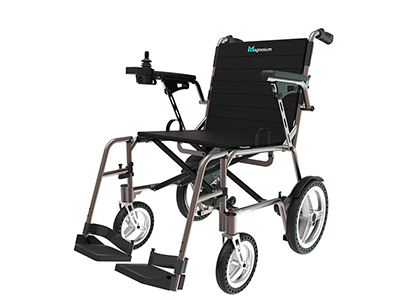
5. Long-Distance Community Access: For older children who need to keep up with peers over long distances or on hilly school campuses, a manual chair may lead to shoulder fatigue. In such scenarios, a lightweight pediatric electric wheelchair from our Magnesium alloy line is the more appropriate clinical choice.
6. Sports Performance: Our standard pediatric chairs are designed for daily life, not high-impact wheelchair basketball or racing. For competitive sports, a specialized rigid sports-frame is required.
Manufacturing and Logistics for Global NGOs and Tenders
Baichen is a preferred pediatric wheelchair manufacturer for global tenders because of our scalability and documentation:
· Capacity: Our 20,000㎡ Jinhua factory can produce up to 1,000 pediatric units per month, allowing us to meet the deadlines of large-scale NGO distributions.
· ISO 13485 Certification: This ensures that our quality management system meets the rigorous requirements of international healthcare organizations.
· Logistics Optimization: Pediatric chairs are smaller, allowing us to fit up to 500 units in a 40'HQ container, significantly reducing the per-unit shipping cost for our partners in Africa, Southeast Asia, and South America.
Frequently Asked Questions
Q1: What is the age range for your pediatric wheelchairs?
Our pediatric line generally covers children from ages 3 to 14. For toddlers or older teenagers, we offer "extra-small" or "small-adult" frame options to ensure a perfect fit.
Q2: How much can the seat width be adjusted on a growable model?
Typically, our growable pediatric frames allow for 2 to 3 inches of width adjustment and 2 to 4 inches of depth adjustment through our modular cross-brace and rail system.
Q3: Does the paint used on the colorful frames contain lead?
No. As a responsible pediatric wheelchair manufacturer, we use lead-free, non-toxic paints from our US-imported Binks line, which are safe even if a child accidentally bites or scratches the frame.
Q4: Can we put our hospital or NGO logo on the wheelchair?
Yes. We offer OEM services including laser-engraved logos on the aluminum frame and custom embroidery or silk-screening on the upholstery for orders meeting our MOQ.
Q5: What is the weight of your lightweight pediatric model?
Our aluminum pediatric chairs typically weigh between 10kg and 12kg, making them easy for parents to lift into a car trunk or for school staff to transport.
Conclusion & Next Step
The pediatric mobility market is defined by trust, safety, and the ability to grow with the child. By partnering with a pediatric wheelchair manufacturer that prioritizes EN 12183 compliance and offers growable, colorful designs, you ensure both clinical success and high user satisfaction.
Are you planning a pediatric procurement or NGO project for 2026?
Contact our Pediatric Mobility Desk today to request a catalog of our latest child-safe designs and a custom wholesale quote.
Table of Contents
- EN 12183 and Pediatric Safety Clauses
- The "Growable" Frame: Maximizing TCO for Institutions
- The Psychology of Color and OEM Options
- Clinical Support: Postural Management and Comfort
- The "Honest Truth": When a Manual Pediatric Chair is NOT Enough
- Manufacturing and Logistics for Global NGOs and Tenders
- Frequently Asked Questions
- Conclusion & Next Step