
 EN
EN

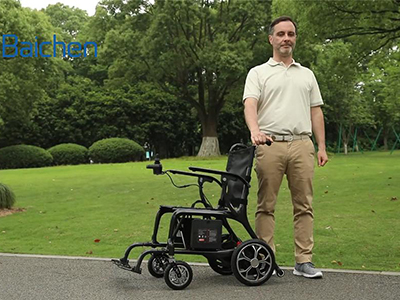
In the 2026 mobility market, "lightweight" is no longer just a luxury feature—it is a mandatory specification for B2B success. As the global population of "active seniors" grows, users are prioritizing travel, independence, and ease of transport. Consequently, B2B distributors and healthcare wholesalers are shifting their focus toward a lightweight electric wheelchair factory that can deliver high-strength frames without the physical burden of traditional steel or heavy aluminum.
At Ningbo Baichen Medical Devices Co., Ltd., we have pioneered the use of aerospace-grade materials in the mobility sector. Operating out of our 20,000㎡ facility in Jinhua Yongkang, we have developed two distinct, high-tech technology tracks: Magnesium Alloy and Carbon Fiber. Whether it is our BC-EM808, which holds the record for the world’s smallest folding size, or the BC-EC8003, weighing a mere 12.5kg, Baichen provides the technical edge required to dominate the portable wheelchair segment. This guide provides a deep-dive comparison of these materials from a B2B procurement perspective to help you make the right long-term investment.
The Material Evolution: Why Go Lightweight?
The shift toward lightweight models is driven by three undeniable market factors:
Air Travel and IATA Regulations
IATA-compliant lithium batteries paired with ultra-light frames allow users to fly with ease. A lightweight wheelchair can be treated as "carry-on" or "gate-checked" luggage more easily, reducing the risk of damage in the cargo hold—a primary concern for travel mobility customers.
Caregiver Ergonomics and Safety
A 12.5kg carbon fiber wheelchair is significantly safer for an elderly spouse or a caregiver to lift into a car trunk than a 40kg steel model. By reducing the weight, we reduce the risk of back injuries and make daily independence a reality for more users.
Shipping and Operational Efficiency
From a B2B perspective, lighter products allow for more efficient container loading. Lighter products can sometimes stay under weight limits for parcel shipping (FedEx/UPS), allowing for easier drop-shipping from your warehouse directly to the customer.
As an established lightweight electric wheelchair factory since 1998, Baichen has transitioned from simple aluminum to these advanced composites to meet these evolving B2B needs.
Magnesium Alloy vs. Carbon Fiber: The B2B Matrix
Choosing the right material depends on your target market's price point and performance requirements. Here is a technical breakdown of the three main materials used in modern wheelchair manufacturing.
| Feature | Aluminum 6061 | Magnesium Alloy | Carbon Fiber |
| Weight Index | 100% (Baseline) | ~70% (30% Lighter) | ~50% (50% Lighter) |
| Durability | High | High impact resistance | Extreme tensile strength |
| Ride Quality | Standard | Excellent vibration damping | Rigid, high-performance |
| Manufacturing | Extruded & Welded | Die-cast or Welded | Labor-intensive layering |
| Cost (Wholesale) | Budget-Friendly | Mid-to-High | Premium |
| Best For | General use | Travel & All-terrain | Luxury & Portability |
The Magnesium Advantage: BC-EM808
Magnesium alloy is the lightest structural metal on earth.
It is approximately 34% lighter by volume than aluminum. Our BC-EM808 utilizes this material to achieve a folding size so compact it fits into the smallest luggage compartments.
Why Magnesium?
· Vibration Damping: Magnesium has a high damping capacity, meaning it absorbs vibrations from uneven sidewalks better than aluminum. This leads to less fatigue for the user.
· Eco-Friendly: Magnesium is abundant and more easily recycled than carbon fiber.
· Finish: When UV electroplated in our American-imported Binks lines, magnesium frames offer a metallic, premium finish that resists scratches.
The Carbon Fiber Pinnacle: BC-EC8003
For clients who demand the absolute lightest possible product, our carbon fiber series is the answer. The BC-EC8003 (12.5kg net weight) represents the peak of modern mobility engineering.
Why Carbon Fiber?
· Strength-to-Weight Ratio: Carbon fiber is roughly 5 times stronger than steel and 2 times stiffer, while being significantly lighter.
· Corrosion Resistance: Unlike metals, carbon fiber cannot rust or corrode, making it ideal for users in coastal or humid regions.
· Aesthetic: The iconic "carbon weave" is a high-end signal that allows distributors to command premium retail prices.
Factory Capabilities: Precision Engineering for Advanced Materials
A lightweight electric wheelchair factory is only as good as its equipment. Working with magnesium and carbon fiber requires specialized infrastructure that traditional factories lack.
Specialized Production Lines
At Baichen, we operate:
· 60 sets of frame processing equipment specifically tuned for the unique welding and cutting requirements of magnesium alloy.
· Carbon Fiber Layering Cleanroom: Ensuring that every layer of carbon fabric is laid with precision to prevent structural voids.
· Precision Die-Casting: For our magnesium components, ensuring consistency and strength that meets ISO 13485 medical standards.
Intelligent Electronics
Lightweight frames handle differently than heavy ones. We tune our Sine wave vector control systems to provide a stable, "planted" feel even on the lightest frames. All our electronics are IP6 waterproof, ensuring that a light frame doesn't mean a fragile machine.
Our facility is fully compliant with CE MDR, UKCA, and holds two FDA 510(k) registrations (K232121 and K250475), providing the regulatory safety required for global distribution.
Advanced Testing at our Lightweight Electric Wheelchair Factory
To ensure that our ultra-light frames—like the 12.5kg BC-EC8003 carbon fiber—are safe for long-term use, Baichen employs specialized medical-grade testing equipment in our Jinhua Yongkang facility:
· Tensile Strength Verification: Every batch of carbon fiber fabric is tested for its tensile modulus to ensure it meets our structural safety standards before it is layered.
· Battery Vibration Test: Since travel wheelchairs are frequently on airplanes and cars, our UN38.3 certified batteries undergo high-frequency vibration testing to ensure the cells remain stable and the IP6 seals remain intact.
· Frame Impact Test: We drop weights on specific frame joints to simulate the impact of a wheelchair being mishandled by airport baggage staff, ensuring the magnesium or carbon fiber does not crack under sudden stress.
Market Analysis: Who is Buying Lightweight?
When building your portfolio as a distributor, target these three high-growth segments:
· The Travel-Mobility Enthusiast: These users want to travel the world. They need the BC-EM808 because it fits in a cruise cabin or a car trunk with ease.
· The Independent Senior: Those who live alone or with an elderly partner. They need a carbon fiber model like the BC-EC8003 because they can lift it themselves without assistance.
· The Tech-Savvy Buyer: These customers are willing to pay a premium for the latest "gadget." The carbon fiber weave and magnesium aesthetics appeal to this demographic.
The Science of Damping: Why Magnesium Beats Aluminum for Comfort
In the lightweight mobility world, "ride quality" is often sacrificed for "weight reduction." However, our magnesium alloy wheelchairs (like the BC-EM808) offer a unique technical advantage known as high specific damping capacity.
· Energy Absorption: Magnesium can absorb vibrations 20 times better than aluminum. This means when a user drives over cracked pavement or tactile paving, the frame absorbs the energy before it reaches the user's spine.
· Reduced Component Fatigue: Because the frame absorbs vibrations, the electronic components (like the Sine wave vector control system) and the battery cells are subjected to less mechanical stress, extending the overall lifespan of the wheelchair.
Technical Spec Table: Magnesium vs. Carbon Fiber (Wholesale Focus)
| Specification | Magnesium Alloy (BC-EM808) | Carbon Fiber (BC-EC8003) |
| Net Weight | 18.5kg (inc. battery) | 12.5kg (inc. battery) |
| Max Load | 130kg (286 lbs) | 120kg (265 lbs) |
| Folded Size | 300 x 580 x 780 mm | 320 x 600 x 800 mm |
| Drive Range | 15-20 km (Standard) | 12-15 km (Ultra-light) |
| Aesthetic | Matte Metallic (UV Painted) | Visible Weave (Clear Coat) |
| Wholesale Tier | High Volume / High Value | Premium / Luxury |
Why Baichen is the Leading Choice for B2B
With 28 years in the industry, Baichen has become a "Tier 1" supplier for Amazon US, Costco, Pride, and Drive. Our ability to scale production to over 15,000 units per month while maintaining "single-unit" QC precision is why we are a top-tier lightweight electric wheelchair factory.
We offer OEM/ODM services that allow you to customize your lightweight line:
· Private Labeling: Laser-engraved logos on magnesium frames.
· Custom Colors: 7-day turnaround for custom frame colors using our UV electroplating lines.
· Custom Programs: Program the joystick sensitivity to match your local market's preferences.
Frequently Asked Questions
Q1: Is carbon fiber stronger than magnesium alloy for wheelchairs?
Carbon fiber has a higher strength-to-weight ratio, meaning it is stronger for its weight. However, magnesium is more "impact resistant" in terms of how it handles a direct blow, making it excellent for all-terrain travel.
Q2: Can lightweight electric wheelchairs be taken on airplanes?
Yes, if they use lithium batteries with UN38.3 certification. Baichen models like the BC-EM808 are specifically designed for airline travel and meet all IATA regulations.
Q3: What is the weight capacity of these lightweight frames?
Despite their low net weight, our magnesium and carbon fiber models support up to 120kg-150kg (265lbs-330lbs) depending on the specific model.
Q4: Do lightweight wheelchairs tip over more easily?
No. At Baichen, we engineer the center of gravity to be low and rearward. Our controllers also feature anti-tip algorithms to ensure stability regardless of frame weight.
Q5: What is the typical warranty on a lightweight frame?
We provide a 3-year warranty on our frames, one of the longest in the industry, reflecting our confidence in the materials we use.
Conclusion & Next Step
The demand for portable, high-tech mobility is only going to grow as the world becomes more mobile. Partnering with a lightweight electric wheelchair factory that masters both magnesium and carbon fiber gives your business a significant competitive advantage in the 2026 market. Baichen’s legacy of innovation and commitment to medical-grade quality ensures that your customers receive the best the world has to offer.
Upgrade your product line today. Request a quote for our Carbon Fiber series and discover why Baichen is the global leader in lightweight mobility.
Table of Contents
- The Material Evolution: Why Go Lightweight?
- Magnesium Alloy vs. Carbon Fiber: The B2B Matrix
- Factory Capabilities: Precision Engineering for Advanced Materials
- Advanced Testing at our Lightweight Electric Wheelchair Factory
- Market Analysis: Who is Buying Lightweight?
- The Science of Damping: Why Magnesium Beats Aluminum for Comfort
- Technical Spec Table: Magnesium vs. Carbon Fiber (Wholesale Focus)
- Why Baichen is the Leading Choice for B2B
- Frequently Asked Questions
- Conclusion & Next Step