
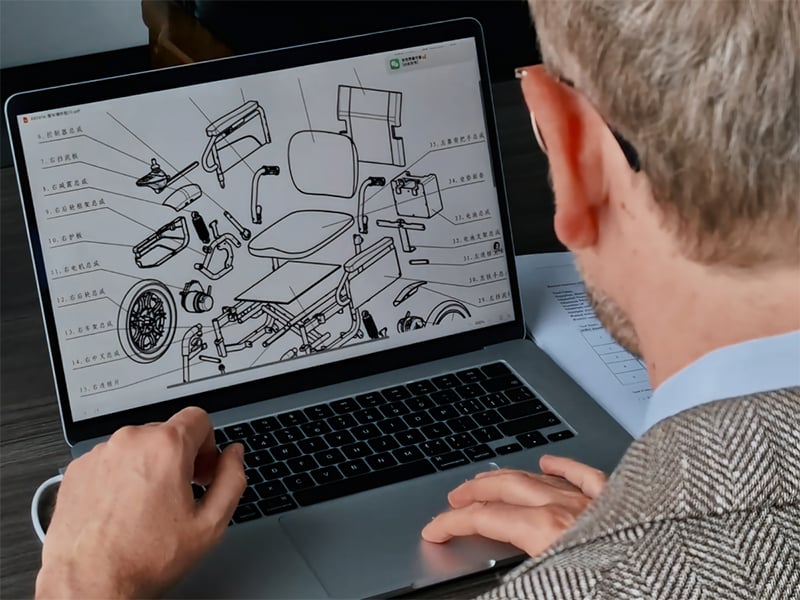
Electric Wheelchair OEM vs ODM with a Manufacturing Partner
For electric wheelchair users, speed is often one of the most direct performance indicators. However, how fast and how steadily a wheelchair can move involves the synergistic effect of multiple technical parameters. Understanding these factors not only helps users use the device correctly but also allows for more informed purchasing decisions. This article will analyze the technical logic behind electric wheelchair speed from four dimensions: motor, battery, control system, and usage environment.

I. Motor Power: The Source of Power
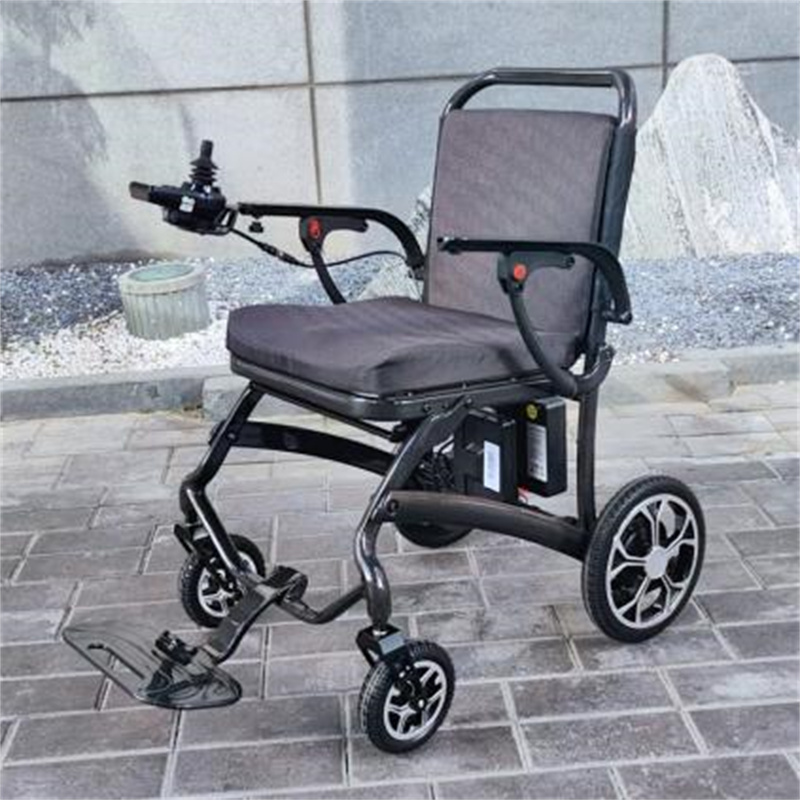
The motor is the core power source of an electric wheelchair, and its power directly determines the wheelchair's maximum speed and hill-climbing ability. Currently, the motor power of mainstream electric wheelchairs on the market is typically between 200W and 500W.
The higher the power, the stronger the driving force the wheelchair can output, and the faster the acceleration response. For users who frequently need to navigate outdoor ramps, a motor of 250W or higher often provides a more comfortable riding experience. However, higher power is not always better—excessive power will accelerate battery consumption and affect battery life. Baichen prioritizes a balance between power and range in its product design, ensuring users find the optimal solution between speed and distance.
II. Battery Voltage and Discharge Capacity: Energy Guarantee
The battery is not only the energy source for electric wheelchairs, but its voltage level and discharge performance directly affect speed performance. Common electric wheelchair batteries have a voltage of 24V, with some high-performance models using a 48V system.
Higher voltage allows for greater instantaneous power from the motor, resulting in better performance in scenarios requiring high torque output, such as starting and climbing hills. Compared to traditional lead-acid batteries, lithium batteries have higher discharge efficiency and more stable voltage output, maintaining a relatively consistent speed performance even as the battery level decreases, avoiding the phenomenon of "slower speed with lower battery."
III. Controller Logic: The Speed Scheduler
The controller is the "brain" of the electric wheelchair, responsible for receiving joystick commands and adjusting motor output. The controller's program algorithm has a decisive impact on the speed experience.
Different brands and models of controllers vary in acceleration curves and response sensitivity. Some controllers employ a linear acceleration design, resulting in smooth and natural speed changes, suitable for users requiring high precision. Others emphasize power response, offering faster starts and more direct acceleration. Furthermore, controllers typically include built-in speed limiting functions to meet safety requirements in different scenarios, allowing users to adjust the maximum speed within a specified range as needed.
IV. Tires and Ground Conditions: The Actual Speed
Even with a powerful power system, tire type and road conditions significantly impact actual speed. Pneumatic tires, due to their elasticity and grip, provide more efficient rolling performance on outdoor surfaces; while solid tires, though maintenance-free, have relatively higher rolling resistance, resulting in a slight decrease in speed under the same power conditions.
Road material is equally crucial. Smooth paved surfaces maximize wheelchair performance, while soft ground or rough brick or gravel surfaces increase rolling resistance, leading to a decrease in speed. This explains why the same wheelchair can provide varying speeds in different scenarios.
V. Load Capacity and Maintenance: Unavoidable Variables
The user's weight and the weight of their belongings directly affect the wheelchair's load capacity. A heavier load requires more torque from the motor, resulting in a lower speed under the same power conditions. Regular maintenance is equally important—insufficient tire pressure and lack of bearing lubrication can increase resistance and affect speed performance.
BaiChen's Recommendation: Beyond Speed, Consider the Overall Experience
BaiChen believes that speed is only one dimension of the overall performance of an electric wheelchair. A truly excellent travel experience should be an organic combination of speed, range, stability, and comfort. Our engineering team repeatedly tests the synergy of motor matching, battery configuration, and controller logic when designing each product to ensure users receive a reliable and safe driving experience in various scenarios.
If you have specific needs regarding wheelchair speed or require professional advice during the purchase process, please contact the BaiChen customer service team. We will recommend the most suitable product configuration based on your usage habits and environmental conditions, making every trip comfortable and effortless.
Ningbo Baichen medical Devices Co.,LTD.,
+86-18058580651
Baichenmedical.com/baichenmobility.com

Copyright © Ningbo Baichen Medical Devices Co., Ltd. All Rights Reserved- Privacy Policy-Blog

 EN
EN