

Mobility Scooter Inventory Storage Guide for Distributors
The last quiet check before a customer arrives
Imagine the customer is due at ten. At nine forty-five, somebody notices that the charger came from the chair in the next bay. The job is to make that discovery yesterday—or at least before the appointment diary begins to control the room. Our electric wheelchair pre-delivery inspection gives staff breathing space to match the labelled unit, handle the mechanical points, take a slow drive and assemble the handover material. Factory inspection has already had its moment. The dealer’s question is nearer and rather personal: “Would I be comfortable beginning with this chair?”
The best inspection bay may be nothing more glamorous than a quiet rectangle of floor. Park the opened carton beside it, labels facing up; recycling can wait ten minutes. Give one colleague the chair and the other the record. When both try to inspect and write at once, small observations have a habit of disappearing. Anything uncertain gets a physical hold tag, never a creative explanation.
Read the label before pressing the power button
Before the power button, read the chair. Put its factory model, dealer SKU, serial or other identifier and colour beside the order record. Now empty the accessory area onto a clean surface: charger, manual, loose items. Chairs from one family can be remarkably persuasive look-alikes, right up to the moment somebody spots another controller or battery choice.
The quoted, model-specific record settles the comparison. Dealers can browse the Baichen electric wheelchair range when exploring categories; the nearest attractive photograph still cannot fill a blank on today’s checklist. Add one readable identity image to the electric wheelchair pre-delivery inspection, followed by front, side and control views. Months later, a service call can begin from those pictures instead of from “I think ours was the blue one”.
Transit marks come next. Photograph the carton as received and follow the possible contact path inward: cardboard, protection, frame, fabric, wheels, footrest, armrests, joystick and visible cable. Scuffed cardboard may have done its job perfectly. Pristine cardboard can also hide a poor internal contact. Record the evidence in front of you, not the story suggested by the box.
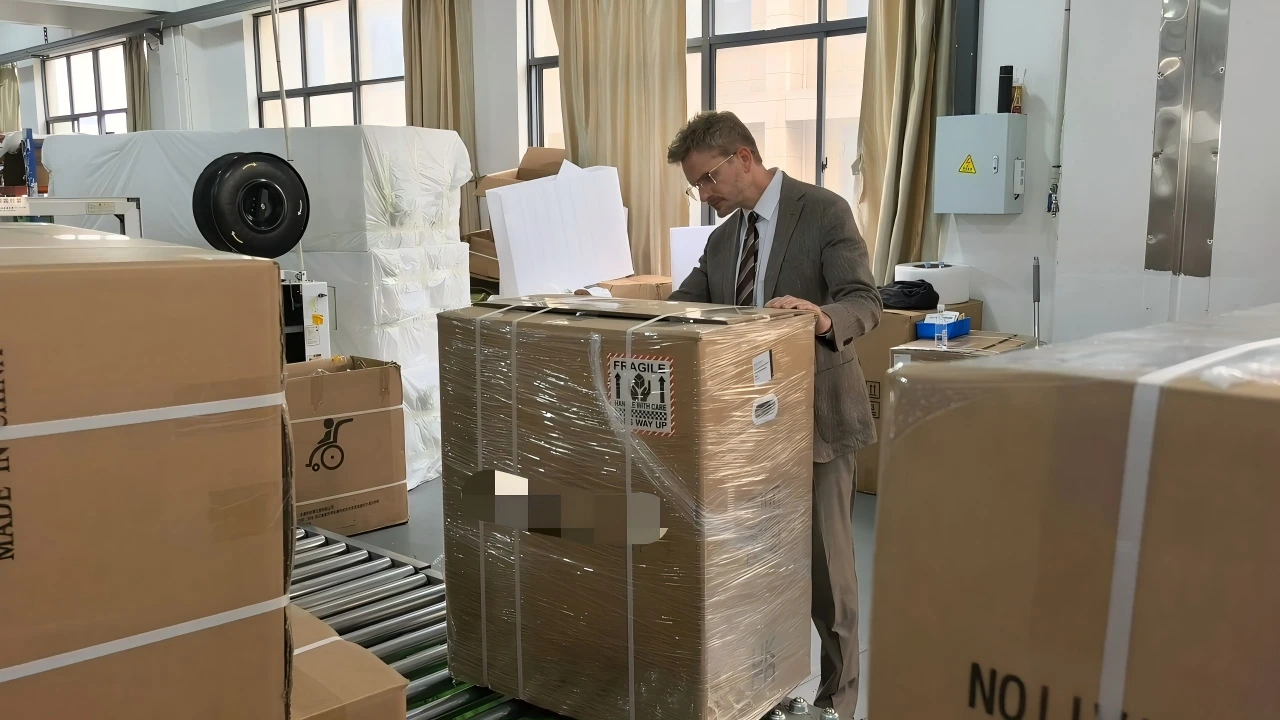
Slow hands find more than fast eyes
Do not let the check quietly turn into an improvised repair. A loose, damaged or safety-related uncertainty sends the chair to the hold area and the approved service route. The tempting phrase “tight enough for today” can destroy evidence and lend tomorrow a larger problem. The electric wheelchair pre-delivery inspection ends with a physical tag. READY goes to the appointment area; HOLD stays put; REFER enters the approved service route. Staff should not need to decode a paragraph before knowing where the chair belongs.
Next comes the freewheel or drive setting. Identify it from the current instructions, check it as directed, and leave it in the agreed handover position. While folding or removing the neighbouring parts, have the second checker watch the visible cable path from the opposite side. For a removable battery, the current instruction—not muscle memory—settles how it is refitted and confirmed. Yesterday’s chair is not allowed to teach today’s procedure.
The useful test drive is almost uneventful
Use tape or cones to claim a small level area, then defend it for the few minutes required. If warehouse traffic still crosses the tape, pause; politeness does not make a moving carton safe. Power up without moving and give the display a moment. Then take the chair through four unhurried actions at the lowest practical speed: forward, easy turn, reverse, stop. Keep the room quiet enough to hear it, and have the recorder watch the joystick as the driver’s hand comes away. Swap the starting end and run the same little pattern once more. A single clean metre is a promising opening line, not the whole story.
No one is proving top speed or range in this room. The dealer is confirming ordinary control and stopping behaviour according to the approved inspection information. Pulling, an unfamiliar indication, unexpected movement or stopping behaviour ends the run. Tag the chair and seek qualified review. Do not chase a faint symptom until it grows into theatre. The observation, unit identity and hold decision give the electric wheelchair pre-delivery inspection what it needs.
At the end, look once more at the control settings from the customer’s side of the chair. A warehouse-friendly speed choice may be a startling opening setting for a new owner. Leave the agreed handover state and put any explanation on the appointment sheet. Hope is not a handover note.
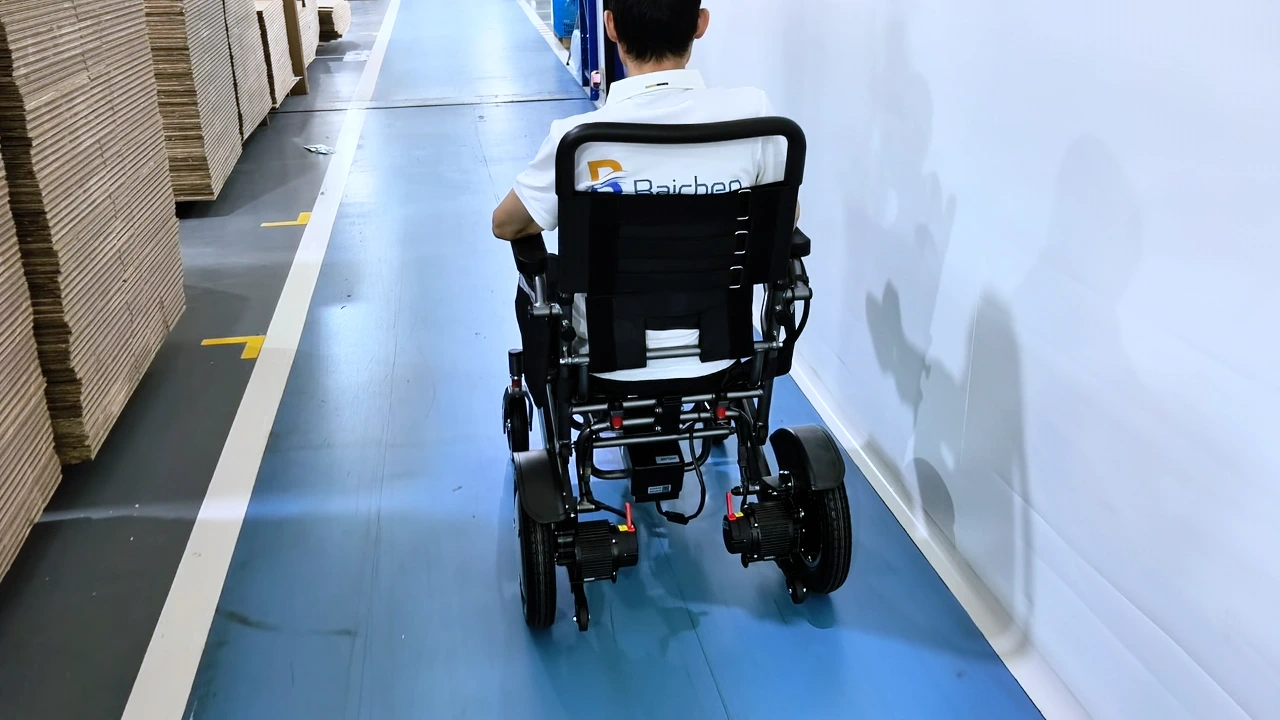
Fold, charge and prepare for the customer’s real route
Next, rehearse the transport sequence for this chair—not the version remembered from last month. If a component comes off, point to the safe hand position and decide where the loose piece waits. Vehicle fit is a tape-measure conversation. Record the real opening and the actual folded package, then name the person expected to do the lifting. A category label cannot carry a chair or close a boot.
Locate the charging point and match the supplied charger to the chair’s record. Use the current manual for connection sequence, indicators, ventilation and storage instructions. Dealer staff should be able to explain the routine without combining advice from different battery systems. Questions about airline or public-transport acceptance belong with the carrier and current local requirements, not with a confident sentence copied from an old sales page.
Baichen’s service page provides a route for product and after-sales discussions. If the charger, manual or configuration is unclear, ask before the appointment. A delayed handover is inconvenient; a wrong instruction travels much further.
Questions from dealer teams
Does every unit need it?
The dealer sets its process around the product, local duties and risk. For powered mobility equipment going to a named customer, “we checked another carton” is a weak readiness decision. A short written rule, rehearsed with the team, should survive both the empty Monday diary and the crowded Friday one.
Can the customer watch?
Selected points can certainly be repeated as part of the customer demonstration. Finish the readiness decision first. A handover should feel calm and prepared; making the customer wait while staff debate an unexpected fault turns quality control into live entertainment.
Prepare delivery with Baichen
When contacting Baichen, include the model family, destination market and the dealer’s usual handover routine. That context lets us answer questions from the electric wheelchair pre-delivery inspection against the right product information. Start with the relevant electric wheelchair categories, or send the unit identity and project notes through the Baichen contact page.

Copyright © Ningbo Baichen Medical Devices Co., Ltd. All Rights Reserved- Privacy Policy-Blog

 EN
EN