
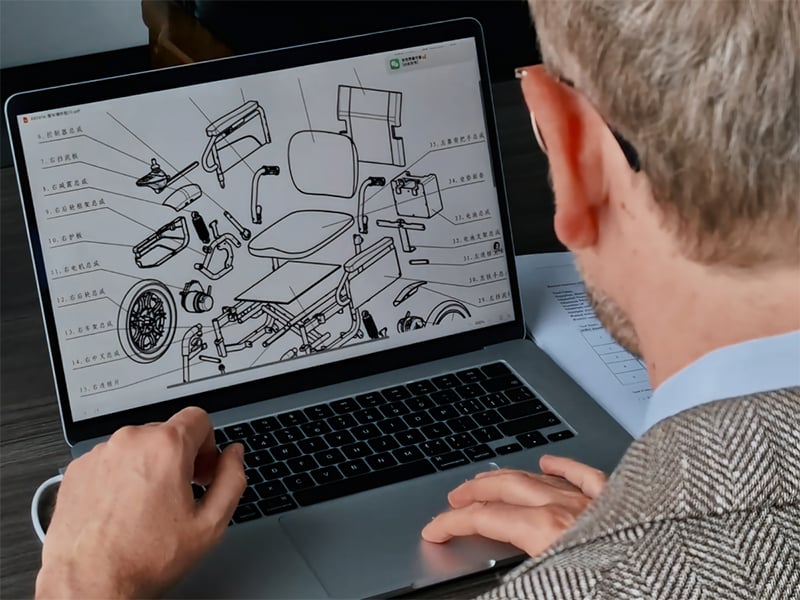
Electric Wheelchair OEM vs ODM with a Manufacturing Partner
A Comprehensive Comparison of Functional Positioning and Usage Scenarios
With the rapid development of personal mobile devices, electric mobility scooters and electric wheelchairs have become important choices for modern travel. Despite their similar appearance, they differ significantly in design philosophy, usage scenarios, and target audiences. Choosing the right option is key to improving quality of life.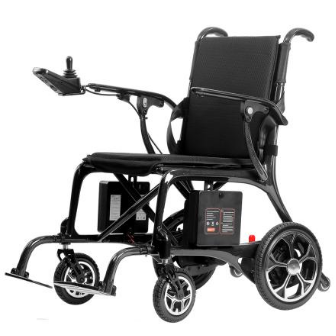
Core Positioning: The Fundamental Difference Between Mobility Tools and Medical Devices
Electric wheelchairs are essentially medical rehabilitation devices, primarily serving users with severely limited mobility. Their design adheres to strict medical standards, providing comprehensive body support and stable low-speed movement. The controller is typically hand-operated, suitable for users with normal upper limb function.
Electric mobility scooters, on the other hand, are positioned as personal transportation tools, targeting individuals with basic mobility but requiring long-distance mobility assistance. Their unique steering lever control and higher speed make them more suitable for outdoor activities and longer-distance travel.
Usage Scenarios: Precise Indoor Mobility and Efficient Outdoor Commuting
Electric wheelchairs perform exceptionally well in indoor environments. Their compact design facilitates agile maneuvering in confined spaces, and precise speed control ensures safe use. Medical institutions, nursing homes, and homes are its primary application scenarios.
Electric mobility scooters, with their superior range and maneuverability, offer significant advantages in outdoor settings. They can easily handle outdoor activities such as supermarket shopping, community events, and park walks. Some models even feature storage space, further enhancing their practicality.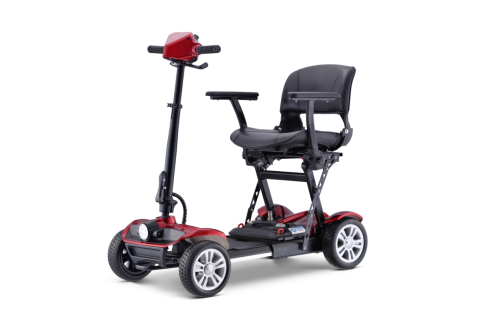
Technical Features Comparison: Balancing Stability and Mobility
Electric wheelchairs employ a balanced four-wheel layout, ensuring extreme stability during operation. Speeds are typically limited to 8 km/h, and they are equipped with electromagnetic braking systems, allowing for safe stopping even on slopes. Ergonomically designed seats provide all-weather comfortable support.
Electric mobility scooters, with their three- or four-wheel designs, prioritize maneuverability, reaching speeds of up to 15 km/h. Flexible steering systems and shock absorption adapt to various road conditions, but require users to possess a certain level of balance.
Target Audience Matching Guidelines
Electric wheelchairs should be the first choice for individuals with severe mobility impairments. Their all-weather support and precise handling meet basic daily mobility needs. Especially for users who need to sit for extended periods, medical-grade seat design effectively prevents complications such as pressure sores.
Electric mobility scooters are more suitable for active seniors with mild mobility impairments. Maintaining a relatively natural sitting posture and easy operation allows users to enjoy the convenience of travel while preserving their existing mobility. Suitable for seniors who frequently participate in social activities and need to shop independently.
Users with special needs require personalized consideration. Heavier users should choose electric wheelchairs with greater weight-bearing capacity; users who frequently travel can consider foldable mobility scooters; users with limited living space may need to measure door widths and passageway dimensions before making a decision.
Key considerations for purchasing decisions: Frequency of use is the primary consideration. Users who use the scooter for more than 4 hours a day should prioritize the comfort of the electric wheelchair; users who use it occasionally may value the portability and ease of storage.
Activity range directly affects equipment selection. Users who are mainly indoors are suitable for electric wheelchairs; users who frequently travel and have a large activity radius need the mobility scooter's battery life.
Hopefully, the above analysis will help you better understand how to choose a mobility scooter or wheelchair, providing a reference for your purchasing decision. If you have any further questions or need more information, please visit our website or contact us directly.
Ningbo Baichen medical Devices Co.,LTD.,
+86-18058580651
Baichenmedical.com/baichenmobility.com

Copyright © Ningbo Baichen Medical Devices Co., Ltd. All Rights Reserved- Privacy Policy-Blog

 EN
EN